Security Researchers Discover Major Google Fast Pair Vulnerability That Could Enable Unauthorized Device Access
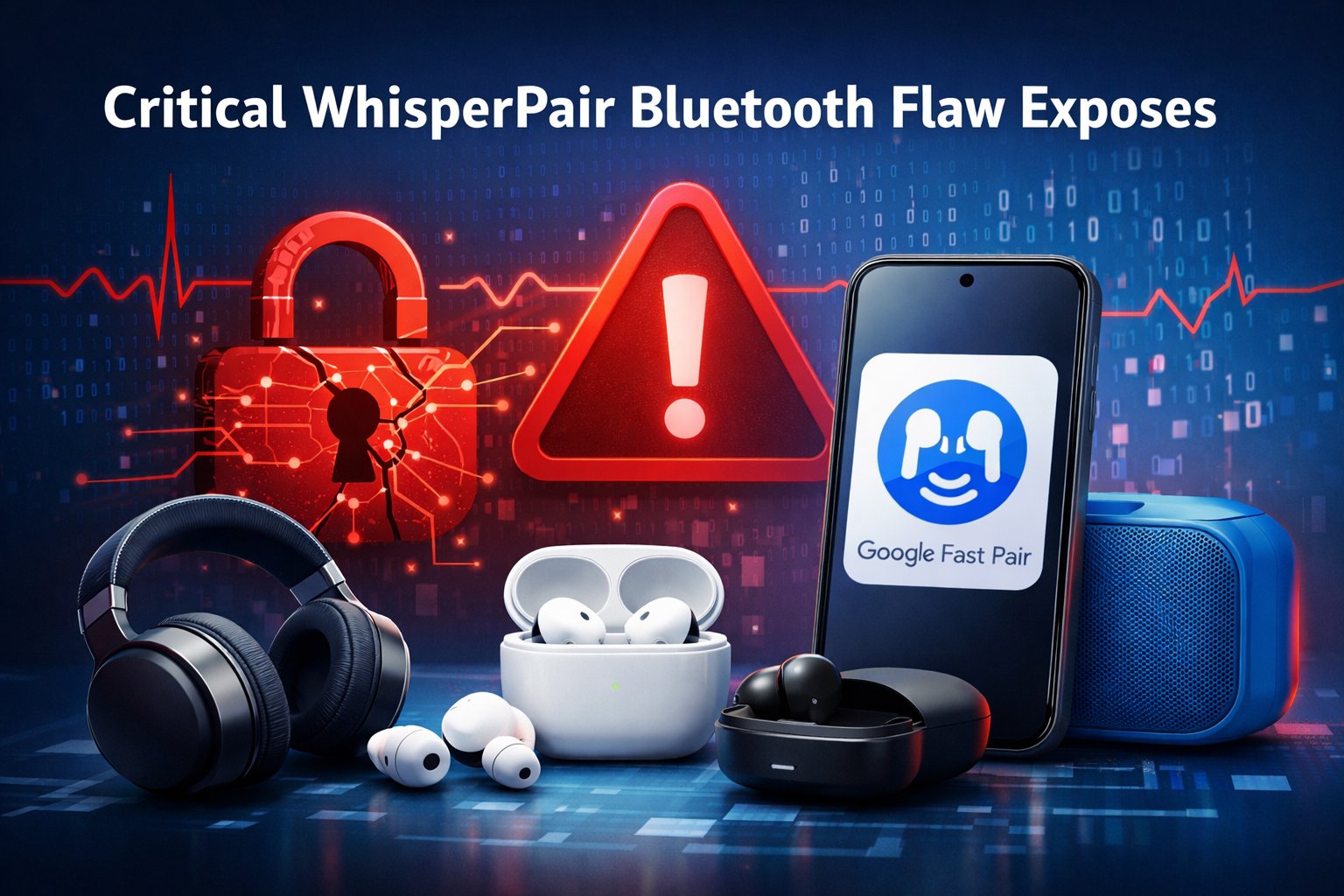
A significant security breach has emerged in the Bluetooth audio device ecosystem, revealing a dangerous Google Fast Pair Vulnerability that affects 17 popular headphone and speaker models. This critical WhisperPair Bluetooth Flaw allows malicious actors to hijack audio devices and potentially eavesdrop on users’ conversations.
What Is the WhisperPair Bluetooth Flaw?
The WhisperPair Bluetooth Flaw represents a serious security vulnerability discovered by researchers at Belgium’s KU Leuven University Computer Security and Industrial Cryptography group. This exploit targets the faulty implementation of Google’s Fast Pair protocol, enabling hackers to gain unauthorized access to Bluetooth audio devices within mere seconds.
Security researcher Sayon Duttagupta from KU Leuven explained the severity of the threat: “You’re walking down the street with your headphones on, listening to music. In less than 15 seconds, we can hijack your device. This means I can activate the microphone and monitor your ambient sound, inject audio, and track your location.”
Understanding the Google Fast Pair Vulnerability
The Google Fast Pair Vulnerability stems from improper implementation of the Fast Pair protocol by hardware manufacturers. Google’s Fast Pair technology should only permit new connections when audio devices enter pairing mode. However, the flawed implementation allows attackers to bypass this security measure and establish unauthorized connections with already-paired devices.
How the Attack Works
Hackers exploit the WhisperPair Bluetooth Flaw through a surprisingly simple process:
- Minimal Requirements: Attackers need only the device’s model number and proximity to the target
- Quick Execution: The entire hijacking process takes less than 15 seconds
- Bluetooth Range: Hackers must remain within standard Bluetooth connectivity range
- Multiple Attack Vectors: Once connected, attackers can activate microphones, inject audio, or track device locations
Affected Devices and Manufacturers
The Google Fast Pair Vulnerability impacts 17 certified audio devices from 10 prominent manufacturers:
- Sony – Various headphone models
- Jabra – Professional and consumer audio devices
- JBL – Popular speaker and headphone lines
- Marshall – Premium audio equipment
- Xiaomi – Budget-friendly audio accessories
- Nothing – Modern wireless earbuds
- OnePlus – Smartphone-companion audio devices
- Soundcore – Value-oriented audio products
- Logitech – Computer and mobile audio accessories
- Google – Pixel Buds (already patched)
Google’s Response to the WhisperPair Bluetooth Flaw
Google acknowledged the WhisperPair Bluetooth Flaw after researchers reported it in August. The company has taken several corrective measures:
Immediate Actions Taken
- Partner Collaboration: Google worked directly with affected hardware partners to develop fixes
- September Patch Rollout: The company provided recommended solutions to OEM partners in September
- Certification Updates: Google enhanced its Validator certification tool and requirements
- Find Hub Fixes: Updates addressed location tracking vulnerabilities
Official Google Statement
A Google spokesperson emphasized their commitment to security: “We appreciate collaborating with security researchers through our Vulnerability Rewards Program, which helps keep our users safe. We worked with these researchers to fix these vulnerabilities, and we have not seen evidence of any exploitation outside of this report’s lab setting.”
Advanced Attack Scenarios Beyond Basic Pairing
The Google Fast Pair Vulnerability enables more sophisticated attacks than simple device hijacking. Researchers discovered that the WhisperPair Bluetooth Flaw affects users regardless of their smartphone platform in certain scenarios.
Location Tracking Through Find Hub
When audio accessories haven’t been linked to Google accounts, attackers can:
- Pair with vulnerable devices using the WhisperPair Bluetooth Flaw
- Associate hijacked devices with their own Google accounts
- Utilize Google’s Find Hub network for continuous location tracking
- Monitor user movements through persistent device connections
Persistent Vulnerabilities
Despite Google’s patches, researchers quickly identified workarounds within hours of the initial Fix Hub update, demonstrating the complexity of addressing the Google Fast Pair Vulnerability comprehensively.
Protecting Yourself from the WhisperPair Bluetooth Flaw
Essential Security Measures
- Regular Firmware Updates: Check for and install the latest firmware updates for all Bluetooth audio devices
- Manufacturer App Installation: Download official apps from device manufacturers to receive critical security patches
- Vulnerability Checking: Use the researchers’ search tool to verify if your devices are affected
- Pairing Mode Awareness: Avoid leaving devices in pairing mode in public spaces
Manufacturer Responses
Several companies have responded to the WhisperPair Bluetooth Flaw disclosure:
OnePlus Statement: “We’re investigating this issue and will take appropriate action to protect our users’ security and privacy.”
Google Pixel Buds: Already patched and protected against the vulnerability.
Technical Implications of the Google Fast Pair Vulnerability
The Google Fast Pair Vulnerability highlights broader security challenges in the Internet of Things (IoT) ecosystem. The flaw demonstrates how protocol implementation errors can create widespread security risks across multiple device manufacturers.
Certification and Standards Issues
The vulnerability raises questions about:
- Quality Control: How certified devices can still contain critical security flaws
- Implementation Standards: The need for stricter protocol implementation guidelines
- Testing Procedures: Enhanced security validation before device certification
- Update Mechanisms: Improving user accessibility to security patches
Long-term Security Concerns
The WhisperPair Bluetooth Flaw represents a broader trend of IoT security vulnerabilities. Many users never install manufacturer apps required for security updates, leaving devices permanently vulnerable to exploitation.
Industry-Wide Impact
This vulnerability affects the entire Bluetooth audio ecosystem, potentially impacting:
- Consumer Trust: User confidence in wireless audio security
- Manufacturer Liability: Company responsibility for ongoing security support
- Protocol Development: Future improvements to Fast Pair implementation standards
- Certification Processes: Enhanced security validation requirements
Future Prevention Strategies
Addressing vulnerabilities like the Google Fast Pair Vulnerability requires coordinated efforts across the technology industry. Manufacturers must prioritize security in initial design phases rather than addressing flaws through post-release patches.
The WhisperPair Bluetooth Flaw serves as a critical reminder that convenient technologies often introduce new security risks. Users must remain vigilant about updating their devices and understanding potential vulnerabilities in their connected audio equipment.
As wireless audio adoption continues growing, the importance of addressing security flaws like the Google Fast Pair Vulnerability becomes increasingly critical for protecting user privacy and maintaining trust in connected device ecosystems.