Meta Exempts Brazilian Users from Third-Party AI Restrictions After Competition Authority Intervention
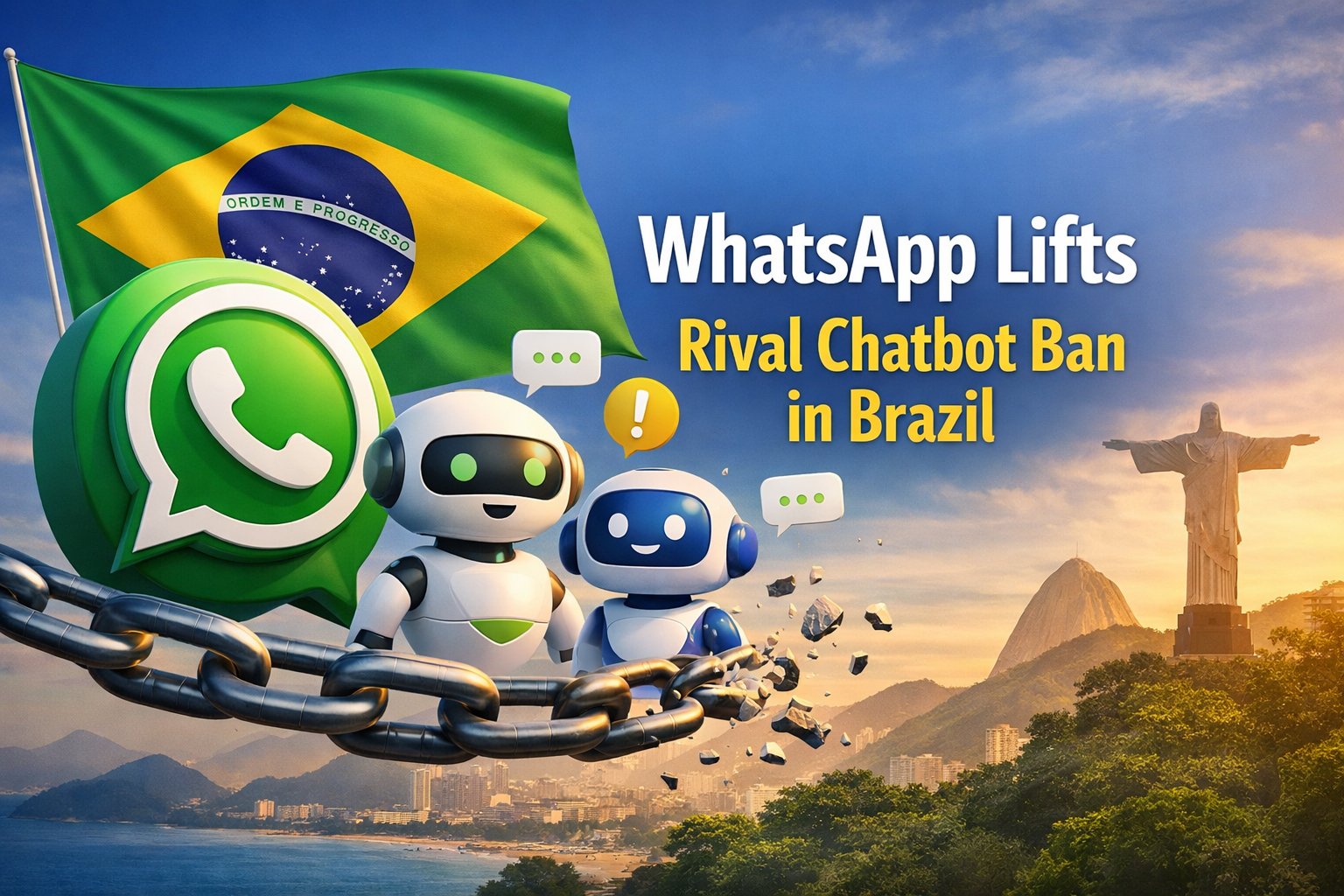
WhatsApp has granted Brazilian users exemption from its controversial rival chatbot ban, marking the second major regulatory victory against Meta’s restrictive AI policies. The decision comes just days after Brazil’s competition regulator CADE ordered the messaging giant to suspend enforcement of rules that prohibit third-party AI chatbots from operating on the platform.
Brazil Joins Italy in Securing Chatbot Access for Users
The exemption allows AI providers to maintain their services for users with Brazilian phone numbers (country code +55), effectively nullifying Meta’s attempt to restrict competitor chatbots in the South American market. This development mirrors similar regulatory pushback from Italy, where WhatsApp previously reversed its rival chatbot ban following intervention from competition authorities.
According to internal notices obtained by industry sources, Meta has instructed AI developers that Brazilian users remain exempt from the January 15, 2025 compliance deadline. The communication specifically states that requirements to “cease responding to user queries and implement pre-approved auto-reply language no longer applies when messaging people with a Brazil country code.”
Understanding WhatsApp’s Controversial AI Policy
The 90-Day Grace Period That Sparked Global Opposition
WhatsApp’s original policy implementation included a 90-day transition period beginning January 15, 2025, during which third-party AI providers faced mandatory restrictions. The policy specifically targets general-purpose chatbots including popular services like ChatGPT and Grok, while maintaining exceptions for customer service bots used by businesses.
Under the contested rules, AI developers must:
- Stop responding to user queries through WhatsApp’s Business API
- Notify users that their chatbots will cease functioning on the platform
- Implement approved automatic responses explaining the service termination
Brazil’s Competition Authority Takes Action
Brazil’s Administrative Council for Economic Defense (CADE) launched an investigation into whether Meta’s terms create unfair competitive advantages for the company’s own AI assistant, Meta AI. The regulatory body expressed concerns that the restrictions could exclude competitors while positioning Meta’s chatbot as the dominant AI service on WhatsApp.
Growing International Opposition to Meta’s AI Restrictions
European Union Opens Formal Antitrust Investigation
The rival chatbot ban faces mounting scrutiny from multiple international regulators. The European Union has initiated a comprehensive antitrust investigation examining whether Meta’s policies violate competition laws across member states. This investigation adds significant pressure on the tech giant to reconsider its approach to AI integration.
Italy Sets Precedent for Regulatory Intervention
Italy became the first country to successfully challenge WhatsApp’s AI restrictions in December 2024. The Italian competition authority’s intervention resulted in user exemptions similar to those now granted to Brazilian customers, establishing a template for other regulators challenging Meta’s policies.
Meta’s Defense of System Limitations and Business Strategy
Technical Justification for AI Restrictions
Meta consistently maintains that third-party AI chatbots create excessive strain on WhatsApp’s Business API infrastructure. Company representatives argue the platform’s systems were designed for traditional business communications rather than AI-powered conversational services that generate high-volume, complex interactions.
A WhatsApp spokesperson defending against CADE’s investigation stated: “These claims are fundamentally flawed. The emergence of AI chatbots on our Business API put a strain on our systems that they were not designed to support.”
Alternative Access Routes for AI Services
Meta emphasizes that users seeking diverse AI experiences can access competitor chatbots through alternative channels including:
- Dedicated mobile applications from app stores
- Direct website interfaces
- Industry partnership integrations
- Standalone messaging platforms
The company rejects characterizations of WhatsApp as a “de facto app store,” arguing that AI companies have multiple established distribution channels beyond Meta’s messaging platform.
Impact on Brazil’s Digital Ecosystem
Preserving AI Innovation and Consumer Choice
Brazil’s successful challenge to the rival chatbot ban preserves access to diverse AI services for over 200 million potential WhatsApp users. This exemption maintains competitive dynamics in the rapidly evolving artificial intelligence market while preventing potential monopolization concerns.
Setting Regional Precedent for Tech Regulation
The Brazilian intervention demonstrates growing regulatory confidence in challenging Big Tech policies that potentially restrict competition. CADE’s swift action signals increased scrutiny of platform policies that could disadvantage competitors or limit consumer choice in emerging technology sectors.
Future Implications for Global AI Competition
Mounting Pressure for Policy Reversal
With major markets including Brazil and Italy securing exemptions, Meta faces increasing pressure to abandon or significantly modify its rival chatbot ban. The combination of regulatory investigations and market-specific exemptions undermines the policy’s global effectiveness while creating compliance complexity.
Regulatory Momentum Against Platform Restrictions
The coordinated response from competition authorities across multiple jurisdictions suggests growing international consensus against platform policies that potentially restrict AI innovation. This trend indicates stronger future oversight of how major tech companies integrate artificial intelligence capabilities.
As WhatsApp continues navigating regulatory challenges surrounding its rival chatbot ban, the exemptions granted to Brazil and Italy demonstrate the power of competition authorities to protect market dynamics in emerging technology sectors. The ongoing investigations and policy reversals signal a critical juncture in determining how AI services will operate across major messaging platforms globally.