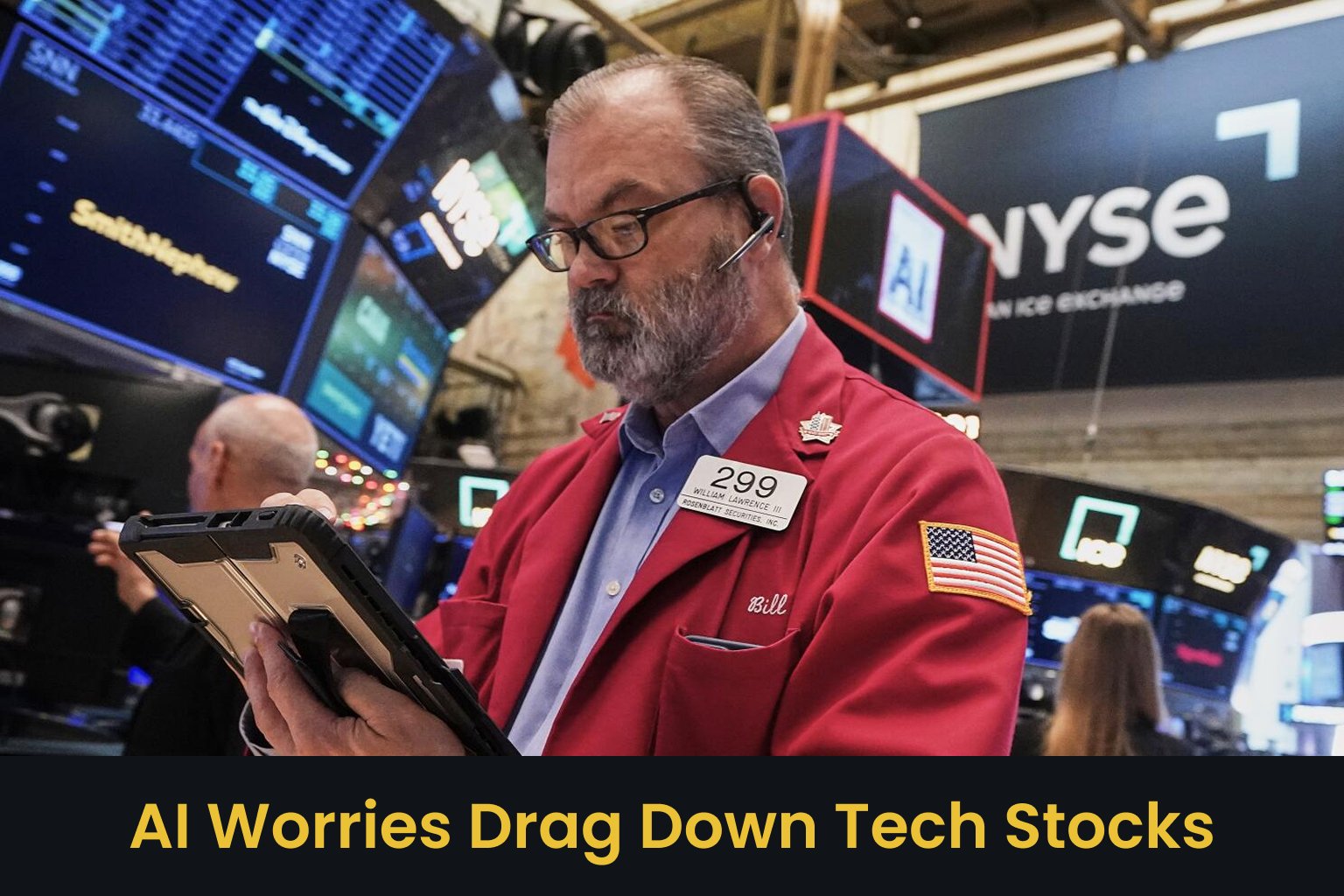
The stock market had a rough day on Wednesday. Major U.S. indexes ended the session lower, driven largely by significant losses in the technology sector. Companies that have been riding the wave of excitement around artificial intelligence (AI) faced a reality check. Investors are starting to ask tough questions. They are worried that stock prices have become too expensive. They are also wondering if the massive rally in AI stocks has finally reached its peak.
Big Names Take a Tumble
Advanced Micro Devices (AMD) was one of the biggest losers of the day. The chipmaker’s stock tumbled by 17%. This drop happened after the company released its quarterly revenue forecast. The numbers were not what investors wanted to hear. The forecast disappointed the market and raised concerns about AMD’s ability to compete. Specifically, investors are worried about how well AMD can stand up against Nvidia, the current heavyweight champion of the AI chip world.
Nvidia itself was not immune to the negative mood. Its stock dropped by 3.4%. The broader semiconductor industry felt the pain as well. The PHLX semiconductor index fell by 4.4%, showing that the sell-off was widespread across chip stocks.
Palantir also had a difficult day. The AI data company’s stock slumped by almost 12%. This was a sharp reversal from the previous day. Just a day earlier, Palantir shares had surged on the back of strong quarterly sales. However, that optimism quickly faded as the broader market sentiment turned sour.
Alphabet’s Rollercoaster Ride
Alphabet, the parent company of Google, experienced a volatile trading session. During regular trading hours, the stock fell almost 2% as investors waited nervously for its quarterly results. However, the story changed after the closing bell.
Once the market closed and the earnings report was released, Alphabet’s stock regained 2%. The company announced that it is aggressively ramping up its spending. The goal is to deepen its investments in the race for AI dominance. This news seemed to reassure investors, at least in the after-hours market.
Market Skepticism Growing
Market experts are noting a shift in how investors view AI. Jed Ellerbroek, a portfolio manager at Argent Capital in St. Louis, explained the situation. He pointed out that the size of the infrastructure being built for AI is unprecedented. The speed at which consumers and businesses are adopting these tools is also unlike anything seen before.
However, this rapid change creates uncertainty. The stock market is struggling to figure out the correct price for these stocks. It is hard to know what the future looks like. Ellerbroek noted that the market has suddenly become skeptical and concerned.
Software Companies Under Pressure
It wasn’t just hardware companies that suffered. Software companies also added to the recent losses. There is a growing worry that rapidly advancing AI technology could disrupt established industry players.
Snowflake saw its shares fall by 4.6%. Datadog lost 3.3%. Josh Chastant, a portfolio manager at GuideStone Funds, highlighted the risks for older software firms. He said that legacy software that is “old and clunky” is a prime target for AI disruption. His firm is currently a bit bearish on the software sector in general because of the pressure from AI.
Shift to Value Stocks
As investors sold off expensive AI-related stocks, they moved their money elsewhere. They shifted into less pricey companies that had missed out on the recent tech rally.
The S&P 500 value index gained ground for a fifth straight session. In contrast, the S&P 500 growth index dropped. This rotation suggests that investors are looking for safer bets and better bargains outside of the high-flying tech sector.
Market Numbers
The main indexes finished the day with mixed results, but mostly in the red.
- The S&P 500 declined 0.51% to end at 6,882.72 points.
- The Nasdaq fell 1.51% to 22,904.58 points.
- The Dow Jones Industrial Average managed to rise 0.53% to 49,501.30 points.
Despite the drop in the overall S&P 500, not every sector suffered. In fact, seven of the 11 major sectors in the index actually rose. The energy sector led the way with a gain of 2.25%. The materials sector followed with a 1.8% increase.
Trading volume was heavy. About 24.6 billion shares changed hands on U.S. exchanges. This was significantly higher than the average of 19.9 billion shares over the previous 20 sessions.
Bright Spots Amid the Gloom
Not all tech-related news was bad. Super Micro Computer saw its shares jump by 13.8%. The company raised its annual revenue forecast. This boost came from sustained demand for its AI-optimized servers. Companies are rushing to ramp up their data center capacity, and Super Micro Computer is benefiting.
Another bright spot was Eli Lilly. The drugmaker’s shares rallied about 10%. The company released a profit forecast for 2026 that was above Wall Street expectations. This positive news helped limit the overall losses for the S&P 500.
Economic Data Delays
On the economic front, there were some scheduling changes. The government’s closely watched jobs report for January has been delayed. It was scheduled for release on Friday. However, a four-day partial government shutdown that ended on Tuesday caused a pushback.
In the meantime, other data provided some clues about the economy. The ADP national employment report released on Wednesday showed that private payrolls increased less than expected in January. There were job losses in professional and business services, as well as in the manufacturing sectors.
Market Breadth
Despite the headline losses, the internal market numbers showed some resilience. Within the S&P 500, advancing stocks actually outnumbered falling ones. The ratio was about 2.6-to-one in favor of advancers.
The S&P 500 posted 93 new highs and 23 new lows. The Nasdaq recorded 218 new highs and 318 new lows.
Conclusion
Wednesday’s trading session served as a reminder that even the hottest trends face scrutiny. The AI rally has driven the market for months, but investors are now taking a step back. They are weighing the high costs and valuations against the potential future rewards. While some companies like Super Micro Computer continue to soar on demand, others like AMD and Palantir are feeling the heat of high expectations. As the market digests more earnings and economic data, the debate over the true value of AI stocks is likely to continue.