Strategic Military Operation Captures Maduro and Challenges Chinese Influence in the Americas
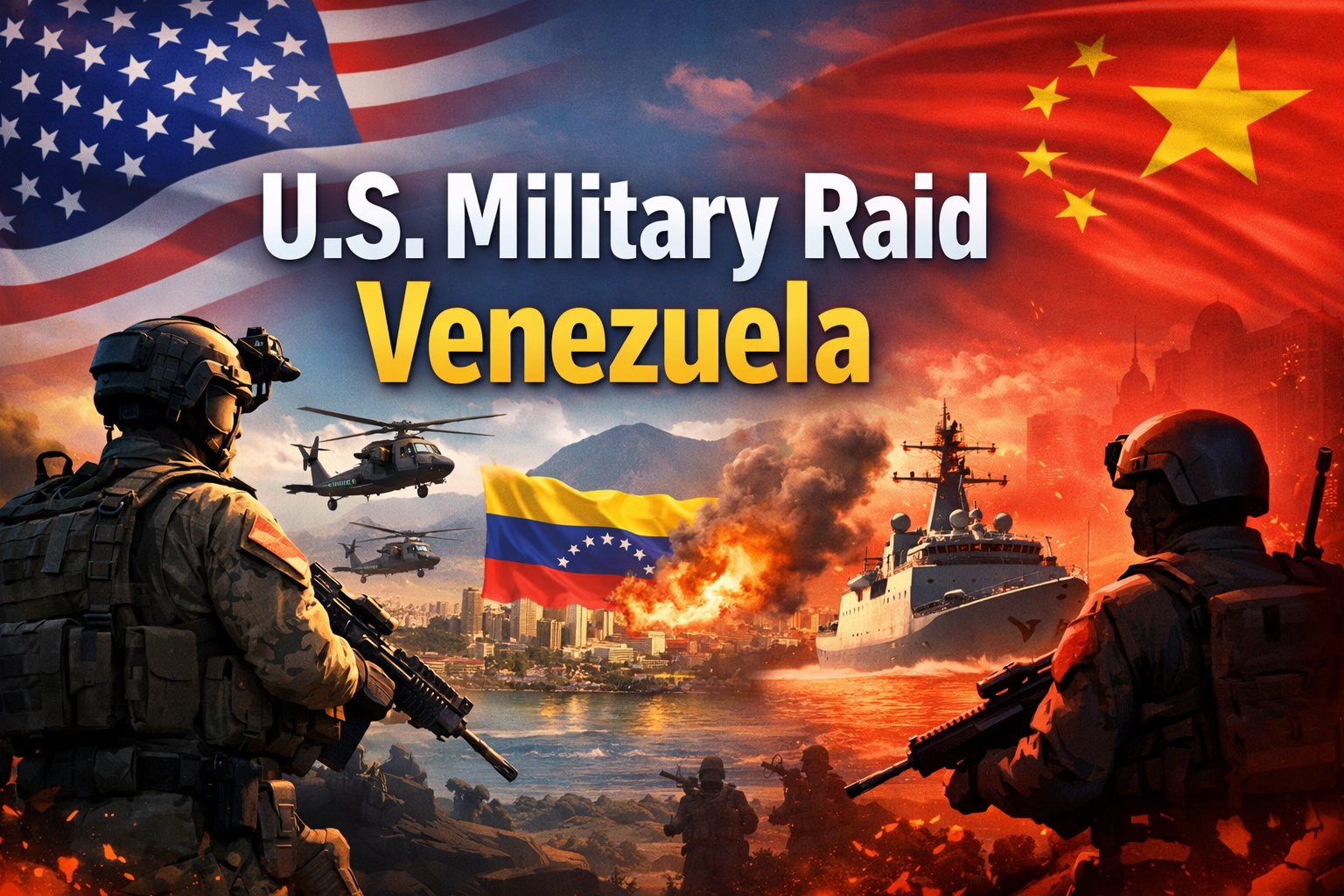
WASHINGTON – The recent U.S. Military Raid Venezuela operation that successfully captured President Nicolas Maduro represents a pivotal moment in the escalating U.S.-China Geopolitical Rivalry, with Washington sending an unmistakable message to Beijing: Chinese influence in the Americas will no longer be tolerated.
China’s Two-Decade Push for Latin American Dominance
For over twenty years, Beijing has systematically expanded its presence across Latin America, establishing critical infrastructure and strategic partnerships designed to challenge U.S. regional supremacy. Chinese investments have created a network of influence spanning from satellite tracking facilities in Argentina to major port operations in Peru, with Venezuela serving as a crucial economic and strategic ally.
The U.S. Military Raid Venezuela operation directly targeted this carefully constructed sphere of influence, demonstrating America’s willingness to take decisive action against perceived threats in its traditional sphere of influence.
Trump Administration Delivers Clear Warning to Beijing
President Trump’s administration orchestrated the January 3rd military operation with multiple strategic objectives, chief among them countering China’s growing regional ambitions. Administration officials confirm that dismantling Chinese economic leverage over Venezuela’s oil resources ranked as a primary mission goal.
Trump explicitly articulated this geopolitical stance during recent meetings with oil industry executives, stating his direct communications with both Chinese and Russian leadership: “We get along with you very well, we like you very much, we don’t want you there, you’re not gonna be there.”
The president further emphasized America’s economic alternative, telling Beijing that U.S. markets remain “open for business” for Chinese oil purchases from American sources rather than sanctioned Venezuelan supplies.
Military Success Exposes Chinese Defense System Failures
The dawn raid that swept through Caracas and captured both President Maduro and his wife demonstrated the limitations of Chinese military technology and strategic protection capabilities. U.S. commandos rapidly neutralized air defense systems supplied by China and Russia, completing their mission without casualties.
Craig Singleton, China expert at the Foundation for Defense of Democracies, characterized the operation as exposing “the gulf between China’s great-power rhetoric and its real reach” throughout the Western Hemisphere.
Strategic Implications for Chinese Defense Exports
The operation’s success raises serious questions about Chinese military hardware effectiveness. Michael Sobolik from the Hudson Institute notes that nations worldwide equipped with Chinese defense systems now question their protection capabilities against U.S. military operations.
Intelligence sources indicate China actively studies the failed defense systems to strengthen their own protective capabilities, highlighting the broader implications of the U.S. Military Raid Venezuela success.
Beijing’s Diplomatic Response and Limited Options
China’s embassy in Washington condemned what it termed “unilateral, illegal and bullying acts” by the United States. Embassy spokesperson Liu Pengyu emphasized China’s commitment to maintaining “friendly exchanges and cooperation” with Latin American and Caribbean nations despite evolving circumstances.
However, this diplomatic protest underscores Beijing’s limited response options when Washington applies direct military pressure. Administration officials suggest China’s regional partners increasingly recognize Beijing cannot provide meaningful protection against U.S. intervention.
Timing Amplifies Chinese Embarrassment
The operation’s timing maximized Beijing’s diplomatic humiliation. Hours before his capture, Maduro publicly met with Qiu Xiaoqi, China’s special envoy for Latin America, in what proved to be the Venezuelan president’s final public appearance before becoming a U.S. captive.
This highly publicized meeting, conducted even as U.S. forces prepared their assault, suggests Beijing remained completely unaware of the impending operation. U.S. officials interpret this public scheduling as evidence China was “blindsided” by American military planning.
Economic Consequences: Oil and Infrastructure Investments
China’s substantial investments in Venezuelan oil refineries and infrastructure provided crucial economic support after 2017 U.S. sanctions implementation. The successful U.S. Military Raid Venezuela operation now redirects 30-50 million barrels of previously Chinese-bound oil to American markets, representing a significant economic blow to Beijing’s energy security strategy.
Regional Implications: Cuba and Panama Canal Concerns
The Venezuela operation’s success creates pressure on other Chinese regional partnerships. Cuba, historically dependent on Venezuelan oil supplies, appears increasingly vulnerable following its benefactor’s collapse. Trump suggested military intervention in Cuba may prove unnecessary as the island nation seems “ready to fall on its own.”
Panama Canal Strategic Concerns
The Trump administration continues pressuring Chinese companies away from Panama Canal port operations, viewing Chinese presence near this critical waterway as a strategic threat. State Department officials acknowledge ongoing concerns about Chinese influence while praising Panama’s decision to exit Beijing’s Belt and Road Initiative and audit Chinese port concessions.
Long-term Strategic Calculations in U.S.-China Geopolitical Rivalry
While China appears strategically disadvantaged following the Venezuelan operation, analysts warn against assuming permanent Chinese retreat from the region. Extended U.S. military involvement in Venezuela or deteriorating security conditions could potentially create opportunities for Chinese re-engagement.
Daniel Russel, former State Department official now with the Asia Society, suggests Trump’s shift toward “spheres-of-influence logic” may inadvertently serve Chinese strategic interests. Beijing seeks U.S. acceptance of Asian regional dominance and may benefit if American forces become “bogged down in Venezuela.”
Conclusion: Reshaping Regional Power Dynamics
The U.S. Military Raid Venezuela operation represents more than a successful military mission – it signals a fundamental shift in how the U.S.-China Geopolitical Rivalry plays out across the Americas. By demonstrating military capability and political will to directly challenge Chinese regional influence, Washington has reset the strategic calculus for both nations’ Latin American engagement.
The operation’s success exposes the limitations of Chinese power projection capabilities while reinforcing American regional dominance. However, the long-term implications of this strategic shift will depend largely on sustained U.S. engagement and Beijing’s adaptive responses to this new geopolitical reality.