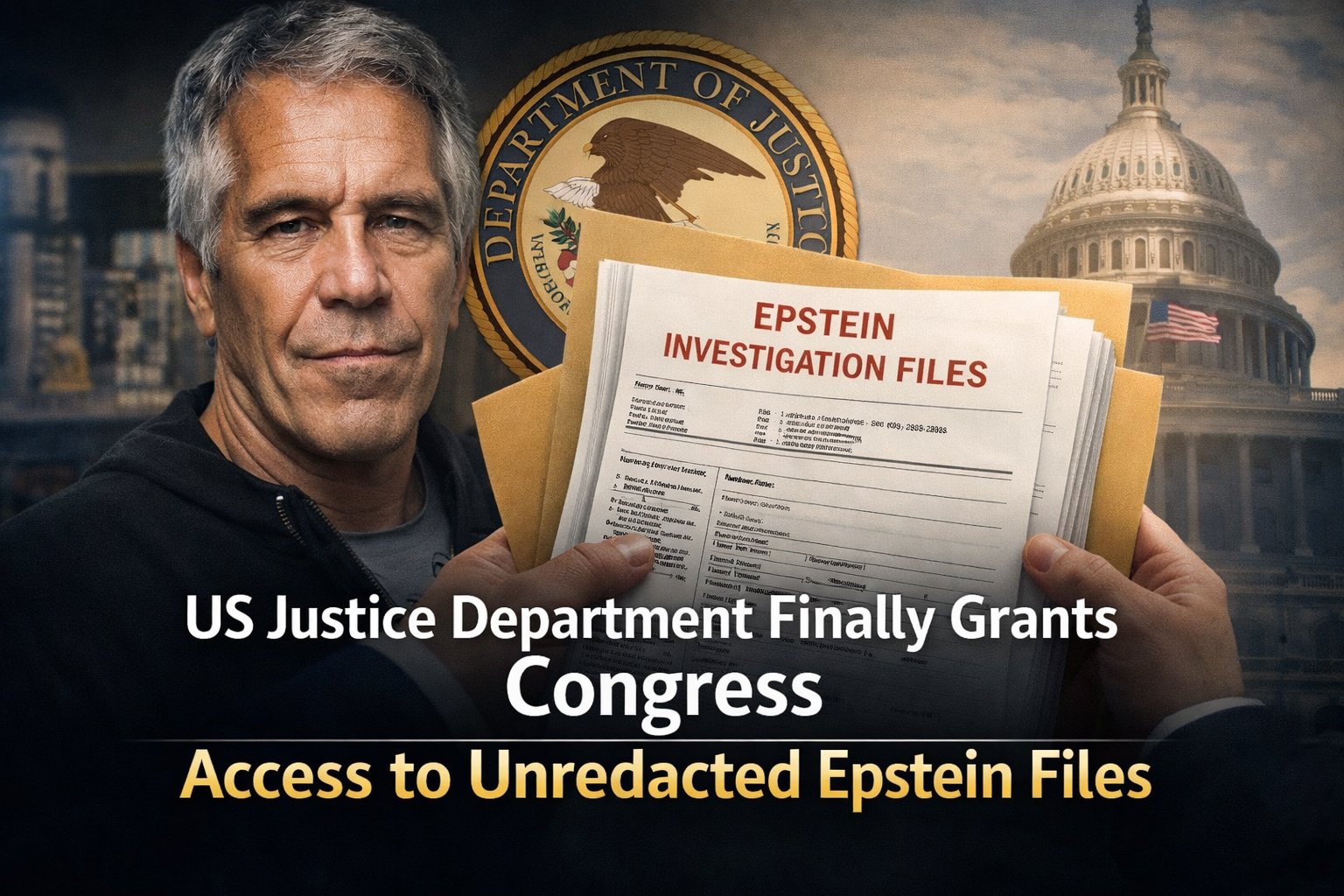
In a significant move toward transparency, the United States Justice Department has opened the unredacted files regarding Jeffrey Epstein to members of Congress. This development comes after intense pressure from lawmakers who have expressed deep concern that crucial names and details were removed from the records previously released to the public.
On Monday, the Justice Department allowed lawmakers to review the complete, unaltered documents. This review process is the latest chapter in a long struggle to uncover the full truth about the network surrounding the late convicted sex offender.
The Fight for Transparency: The Epstein Files Transparency Act
The release of these documents was mandated by the Epstein Files Transparency Act (EFTA), a piece of legislation that Congress passed with overwhelming support in November. The Act was designed to force the Justice Department to hand over every document in its possession related to Epstein’s investigations and operations.
The law included specific instructions on what could—and could not—be hidden from the public. While it required the protection of Epstein’s victims (estimated by the FBI to number over 1,000) by redacting their names and personally identifiable information, it drew a hard line against protecting powerful figures.
The Act explicitly stated that no records could be “withheld, delayed, or redacted on the basis of embarrassment, reputational harm, or political sensitivity.” This clause was specifically intended to prevent the government from shielding public officials, foreign dignitaries, or influential business figures who may have been associated with Epstein.
Lawmakers Flag Suspicious Redactions
Despite the clear language of the law, the initial public release of over three million documents has sparked controversy. Representative Ro Khanna, a Democrat from California, has been a vocal critic of how the Department of Justice handled the release. He is among several House members questioning why certain names remain blacked out in the public versions of the files.
Khanna took to his Facebook page to post specific examples of redactions that he believes violate the spirit and the letter of the Transparency Act. He highlighted two particularly disturbing emails where the sender’s identity was hidden.
One email, dated January 17, 2013, contained the message: “New Brazilian just arrived, sexy and cute, =9yo.” The name of the person who sent this message to Epstein was blacked out.
A second email, sent on March 11, 2014, read: “Thank you for a fun night. Your littlest girl was a little naughty.” Again, the sender’s name was redacted.
Representative Khanna argued that concealing the identities of the people who sent these messages is unacceptable. “Concealing the reputations of these powerful men is a blatant violation of the Epstein Transparency Act,” he stated, insisting that these names must be revealed to the public.
Ghislaine Maxwell Remains Silent
As lawmakers combed through the files, the only person currently imprisoned for crimes related to Epstein’s operation refused to cooperate. Ghislaine Maxwell, Epstein’s former girlfriend and longtime associate, is serving a 20-year prison sentence for sex trafficking underage girls.
On Monday, Maxwell appeared from prison to testify before Congress. However, she refused to answer any questions from the committee. Instead, she issued an ultimatum: she stated that she would only speak if President Donald Trump granted her clemency.
Maxwell remains a central figure in the scandal. While Epstein died in his New York jail cell in 2019 while awaiting trial, Maxwell was convicted in 2021. The Justice Department has indicated that no new prosecutions are expected, even as the files continue to expose the involvement of various political and business leaders.
Political Fallout and Public Distrust
The path to releasing these files has been politically fraught. President Donald Trump initially fought for months to prevent the release of the vast trove of documents concerning his former friend. However, he faced a rebellion within his own party. Republican lawmakers joined Democrats to force the issue, leaving Trump with no choice but to sign the law mandating the full release of the records.
This bipartisan push reflects a broader sentiment among the American public. For years, there has been a widespread suspicion—shared by critics and supporters of the President alike—that a cover-up was in place to protect the rich and powerful men who moved in Epstein’s orbit. With the unredacted files now under congressional review, the public waits to see if the full truth will finally come to light.