South Korea’s scientific community had a busy week filled with major announcements. On the 5th, the Ministry of Science and ICT (MSIT) led a series of initiatives aimed at strengthening the nation’s technological infrastructure. These developments ranged from high-level discussions on battery technology to new government funding for public safety. Additionally, major organizations announced educational programs for the public and awards for industry leaders.
Shaping the Future of Batteries
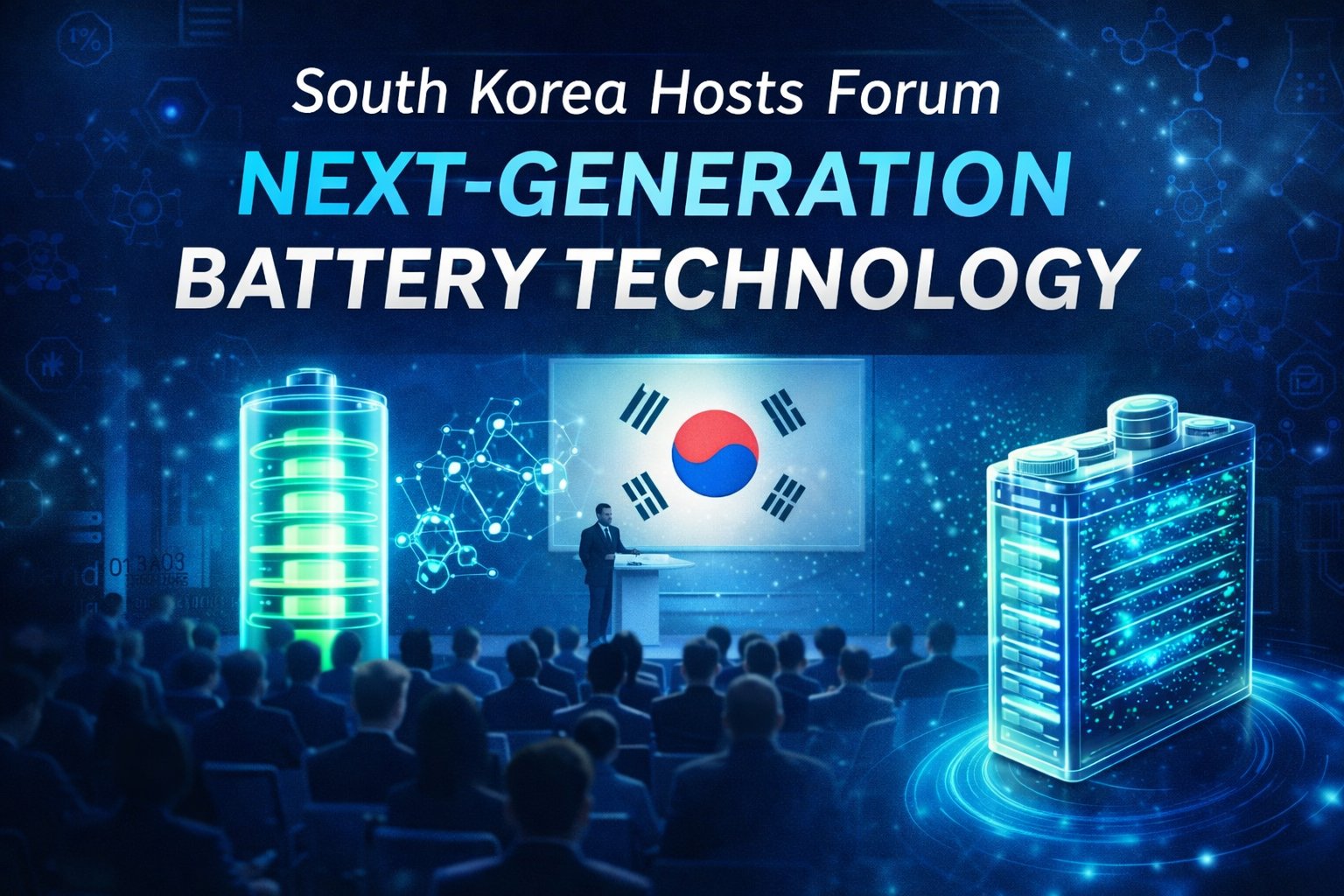
The week began with a significant focus on energy storage. The MSIT hosted the “2026 Next-Generation Secondary Battery International Forum.” This major event took place at the Science and Technology Convention Center in Seoul. The primary goal of the forum was to bring experts together to discuss the future. They reviewed current technology trends and looked at research and development (R&D) strategies. The forum also aimed to strengthen the foundation for global cooperation in this critical sector.
The event featured a robust panel discussion. It included distinguished scholars and research experts from major nations, including the United States, Germany, and Japan. These experts covered a wide variety of essential topics. They discussed the commercialization prospects for next-generation battery technology. They also analyzed changes in the global supply chain. Furthermore, the panel explored ways to promote international joint research.
The forum was not just about discussion. It was also about action. On the second day of the event, a “Tech Partnering” session was scheduled. This event was designed to facilitate direct technology exchange. It connected the market-leading strategic research group for next-generation secondary batteries with actual battery companies. This connection aims to bridge the gap between theoretical research and practical industry application.
New Funding for Public Safety Technology
In another major announcement on the 5th, the MSIT partnered with the National Police Agency. Together, they revealed plans to launch the “Public Safety New Industry Core Technology Commercialization Support” project. This initiative will begin in earnest in 2026. The goal is to support the swift application of R&D achievements directly in the field.
The government has already started the call for new project proposals for this year. The project focuses on establishing a specialized system. This system will support the entire lifecycle of a technology. This includes development, productization, certification, and market entry. The focus is strictly based on the actual needs of the public safety sector.
The investment in this project is substantial. A total of 27.3 billion KRW will be invested over six years, from 2026 to 2031. This funding will support a total of 44 projects. For this year specifically, seven new projects will be selected. These projects will receive about 500 million KRW in support over a two-year period.
Science Education for Adults
The National Science Museum is also stepping up its educational efforts. On the 5th, the museum announced the return of the “64th Science Culture University.” This is a popular educational program designed specifically for adults. It will run every Thursday at the museum. The course dates are set from March 12 to May 28.
The curriculum is diverse and engaging. It plans to cover topics related to the museum’s current exhibitions and events. Interesting subjects include the hidden data science found in baseball. Other sessions will cover brain science and mental health. The program will also address the latest digital issues. This includes deep dives into artificial intelligence (AI) and information security.
In a new move, the museum is establishing a monthly “Science Museum Invitation Week.” This initiative allows for applications from partner institutions. These include local lifelong learning centers and welfare centers. Registration for the program will be open on a first-come, first-served basis. Interested participants can register from 10 a.m. on February 11 until February 25. Registration must be done through the National Science Museum’s online education reservation system.
Global Networking and Industry Awards
The scientific community is also looking outward. The Young Korean Academy of Science and Technology (YKAST) announced that it will host the “YKAST Global Conference 2026.” This event will take place in Busan. It will run for three days starting from the 9th. The theme for the conference is “A Sustainable Future Opened by Science and Technology.”
The purpose of this gathering is to expand exchanges among young scientists. It aims to build a long-term global network. A total of 69 young scientists will attend. This includes 64 members of YKAST and five invited speakers from abroad. Guests will come from countries such as Sweden, the United Kingdom, and Japan. They will present their latest research achievements and explore opportunities for joint work.
Finally, the Korea Industrial Technology Association (KOITA) recognized excellence in the field. On the 5th, they announced 12 winners for the “2026 KOITA Technology Management Awards.” This award was established in 1997. It honors technology managers who have contributed to industrial technology and innovation.
In the Chief Technology Officer (CTO) and Research Director category, four leaders were selected. They are Min Seung-bae, Vice President of 3M Korea; Lee Yong-kwan, CEO of Reshenie; Lee Ho-kyu, Research Director at Vuniq; and Jeong Jae-chang, Research Director at Trasis.
In the Chief Executive Officer (CEO) category, five leaders were honored. The winners include Kang Chang-soo, CEO of Pawell Corporation; Kim Jung-hwan, Chairman of Himpel; Baek Seo-jae, Chairman of Daeyoung Electronics; Shim Hyun-seok, CEO of Dongsan Tech; and Cha Seong-hak, CEO of Kunmyung Techwin.
Three winners were selected in the Digital Innovation and Carbon Neutrality category. They are Kim Min-seon, Executive Director at KLCUBE; Shin Myoung-kyun, Research Fellow at POSCO; and Han Jun-seob, CEO of G-Mission.
Conclusion
These announcements collectively highlight South Korea’s aggressive approach to science and technology in 2026. From securing the future of battery power to ensuring public safety through tech, the government is investing heavily. Simultaneously, institutions are ensuring that education reaches the public and that industry leaders are recognized for their innovation. This multi-pronged approach suggests a vibrant year ahead for the Korean scientific community.