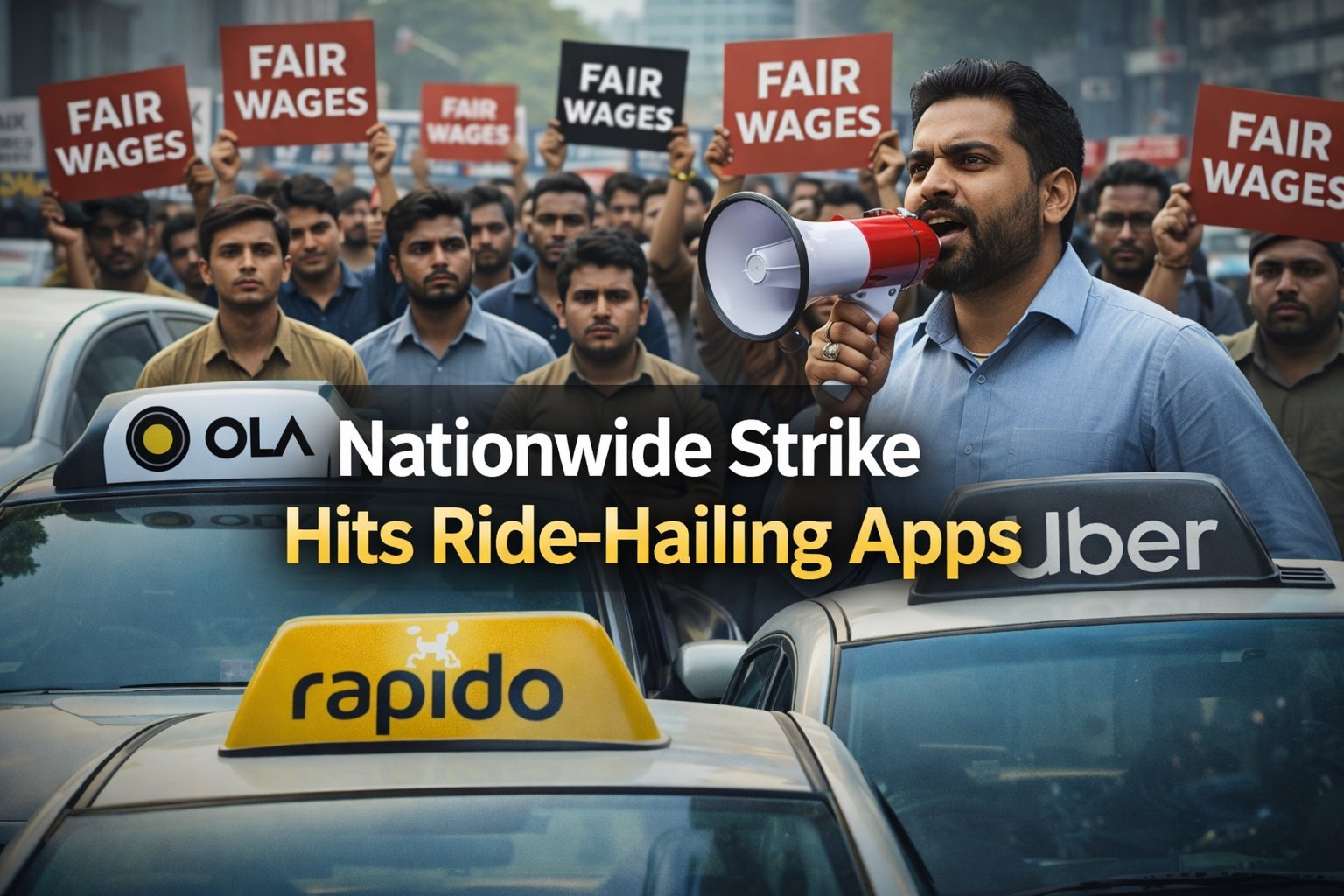
Daily commutes across India have hit a major roadblock today, Saturday, February 7, 2026. A massive, coordinated strike has been launched by drivers working for major ride-hailing platforms like Ola, Uber, and Rapido. The protest, termed the ‘All India Breakdown,’ is seeing thousands of drivers logging off their apps. This digital blackout is scheduled to last for at least six hours, causing significant disruption to transportation services in cities across the country.
Commuters who rely on these convenient apps for cabs, auto-rickshaws, and bike taxis are facing difficulties. Many are finding themselves stranded or forced to look for alternative modes of travel. The strike is not just a spur-of-the-moment decision but a calculated move to draw the government’s attention to deep-seated issues within the gig economy.
Who Is Behind the Strike?
The call for this nationwide protest came from the Telangana Gig and Platform Workers Union (TGPWU). They are not acting alone; the strike is backed by various other labor organizations that operate across different states in India. These unions represent the thousands of drivers who keep the cities moving but feel they are being left behind by the very platforms they serve.
The union has described the current situation as dire. They argue that the pricing practices used by these tech giants are unfair. Furthermore, they believe that the regulation in the sector is far too weak to protect the rights of the workers. According to the union, aggregator platforms—the companies that own the apps—continue to decide fares independently. This is happening despite the existence of the Motor Vehicle Aggregator Guidelines, 2025, which were introduced to bring structure to the industry.
In a strong statement released on social media, the union declared, “No minimum fares. No regulation. Endless exploitation. Govt must act now. Millions of app-based drivers are pushed into poverty while aggregators profit. Govt silence = platform impunity.”
The Core Issue: Why Drivers Are Angry
The primary reason for the protest revolves around money and stability. The union has stated that aggregator companies are setting fares on their own terms. This arbitrary pricing creates a volatile environment for drivers. Many of these workers depend entirely on app-based work to feed their families and pay their bills. When fares fluctuate wildly or remain too low, their livelihood is threatened.
The union points out that despite the new guidelines introduced in 2025, nothing has changed on the ground. Platforms continue to fix prices without consulting the people who actually drive the vehicles. The drivers feel that the government’s silence on this issue is allowing these companies to operate with impunity, prioritizing profits over the well-being of their workforce.
The Two Big Demands
The striking drivers have placed two specific, non-negotiable demands before the government. They believe these changes are essential to save the industry and their livelihoods.
1. Immediate Notification of Minimum Base Fares The first demand is for the government to officially notify minimum base fares for all app-based transport services. This includes every category: auto-rickshaws, cabs, bike taxis, and any other aggregator-based service. The union insists that these fares cannot be decided by the companies alone. They want the prices to be finalized through a consultation process. This process should involve recognized driver and worker unions to ensure fairness. Furthermore, the fares must align with the Motor Vehicle Aggregator Guidelines, 2025. This would ensure that a driver earns a guaranteed minimum amount for every ride, protecting them from extremely low prices that barely cover fuel costs.
2. Ban on Private Vehicles for Commercial Use The second demand focuses on fair competition. The union is calling for a strict ban on the use of private, non-commercial vehicles for transporting passengers or goods commercially. In the ride-hailing sector, there has been a rise in the use of private vehicles (often with white number plates) doing the same work as commercial vehicles (yellow number plates). Commercial drivers pay higher taxes and permit fees to operate. When private vehicles are allowed to do the same job without these overhead costs, it undercuts the earnings of professional drivers. The union wants this practice stopped immediately to ensure a level playing field.
A Growing Wave of Discontent
This strike on February 7 is not an isolated event. It is part of a growing wave of dissatisfaction among gig workers in India. The gig economy has expanded rapidly, but worker protections have not kept pace.
Just recently, in December 2025, workers from food delivery and quick-commerce platforms held their own demonstrations. They were protesting against low payouts and demanding better working conditions, especially during peak business days when the workload is highest.
Even the government is aware of the problem. The Economic Survey 2025-26, which was released on January 30, flagged these exact concerns. While the survey acknowledged the fast growth of the gig economy as a job creator, it also highlighted significant gaps in worker protection.
Conclusion
The ‘All India Breakdown’ serves as a stark reminder of the fragile relationship between gig workers and platform companies. As thousands of drivers stay off the roads today, the message to the government is clear: regulations on paper are not enough. Drivers need minimum fares and protection from unfair competition to survive. Until these demands are met, the friction between the app companies and their workforce is likely to continue, leaving commuters caught in the middle.