Italian Premier Rejects Military Action, Champions Alliance-Based Approach to Arctic Security
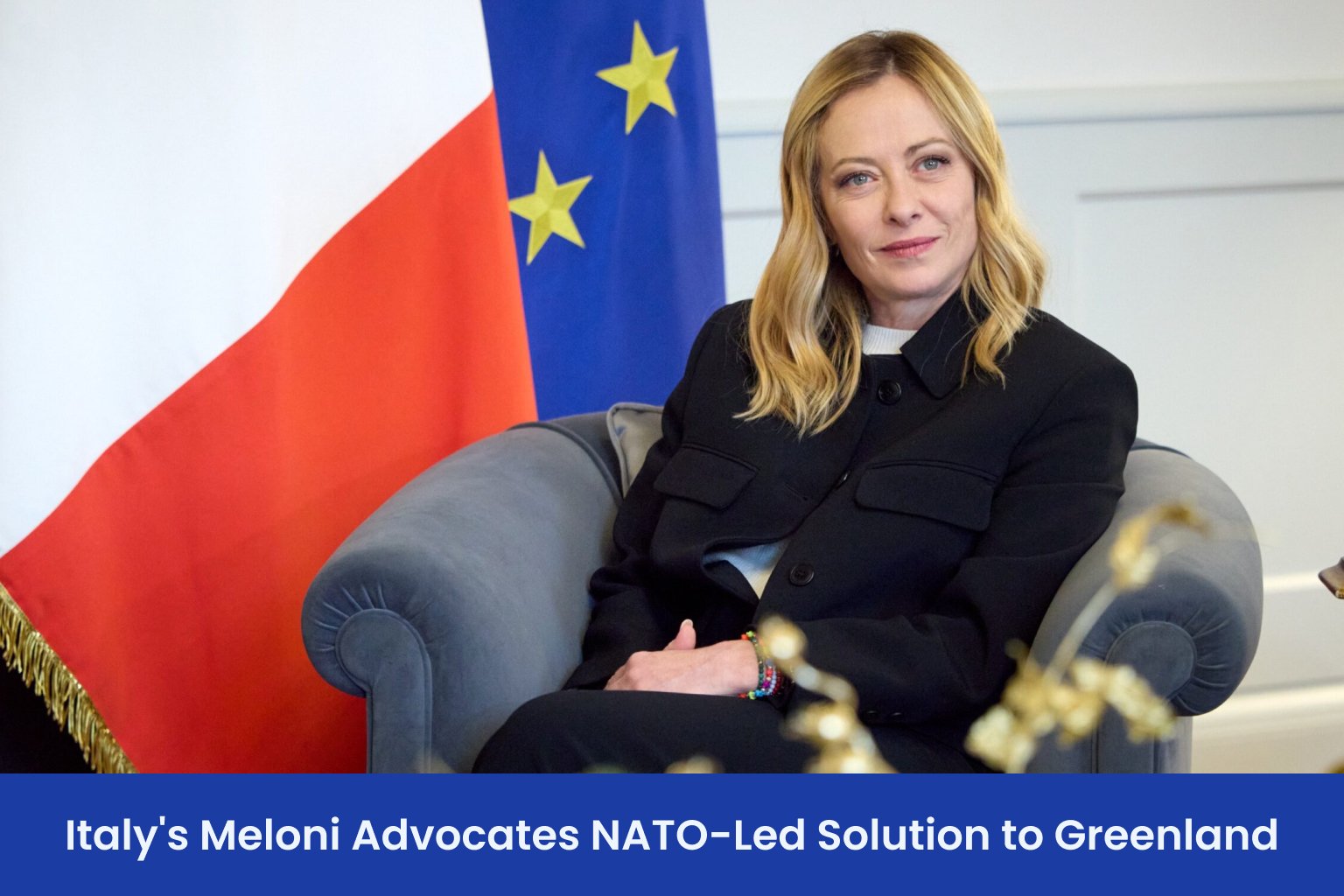
Italian Prime Minister Giorgia Meloni has firmly dismissed the possibility of US military intervention in Greenland, positioning herself as a key diplomatic voice in the escalating Greenland Sovereignty Dispute. During her New Year press conference in Rome, Meloni demonstrated calculated Meloni Arctic Diplomacy by proposing NATO-centered solutions to address American security concerns in the strategically vital Arctic region.
Meloni’s Stance on US Military Intervention in Greenland
The Italian leader expressed strong confidence that Washington would not pursue military action against the Danish territory. “I still don’t believe in the possibility of the U.S. initiating military action to take control of Greenland,” Meloni declared, emphasizing that Italy would oppose any such military approach.
Her position directly addresses the Greenland Sovereignty Dispute that has intensified following renewed American interest in the mineral-rich, strategically positioned island. Meloni stressed that military action would serve no one’s interests and could severely damage NATO’s unity.
Strategic NATO Presence as Alternative Solution
Central to Meloni Arctic Diplomacy lies the proposal for enhanced NATO involvement in Arctic affairs. The Italian Premier advocates for a reinforced alliance presence in the region as the optimal method to address legitimate US security concerns while respecting international sovereignty principles.
“I think the Trump administration, with its somewhat assertive methods, focuses primarily on the strategic importance of Greenland and the Arctic region for its security,” Meloni observed. She highlighted that multiple foreign actors operate in this area, interpreting American messaging as a clear rejection of hostile foreign influence.
Italy’s Mediating Role Between US and European Interests
Meloni has established herself as President Trump’s closest European ally, actively mediating between often-conflicting American and European Union priorities. This unique positioning enables her to address the Greenland Sovereignty Dispute from both transatlantic perspectives.
The Italian conservative leader acknowledged that any US military action against Greenland would significantly impact NATO’s stability and effectiveness. Her diplomatic approach seeks to balance American security requirements with European sovereignty principles.
International Legal Framework and Sovereignty Rights
The Greenland Sovereignty Dispute involves complex international legal considerations that Meloni has consistently emphasized. She firmly stated that “international law must be fully defended,” reinforcing the position taken by major European powers including Britain, France, Germany, Poland, and Spain.
These nations have collectively defended Greenland’s sovereignty alongside Denmark, whose territorial rights over the island received US government recognition in the early 20th century. This historical precedent strengthens the legal foundation opposing any unilateral territorial acquisition attempts.
Trump Administration’s Renewed Arctic Ambitions
The current administration has revived discussions about acquiring Greenland that first emerged during Trump’s previous presidency. Recent military actions in Venezuela have coincided with renewed calls for American control over Greenland, citing strategic national security considerations.
Meloni Arctic Diplomacy addresses these ambitions by acknowledging legitimate security concerns while promoting multilateral solutions through existing alliance structures. This approach aims to satisfy American strategic objectives without undermining international legal frameworks.
Balancing Transatlantic Relationships
Meloni’s foreign policy strategy rests on two fundamental pillars: European integration and the Atlantic Alliance. She recognizes that perfect alignment between national interests remains impossible, stating, “I don’t always agree with everything my allies say. The interests of nations don’t always perfectly overlap.”
This pragmatic approach enables her to navigate the Greenland Sovereignty Dispute while maintaining strong relationships across the Atlantic divide. Her diplomatic methodology demonstrates how European leaders can support American security interests without compromising sovereignty principles.
Arctic Region’s Growing Strategic Importance
The Arctic’s increasing geopolitical significance underlies the current Greenland Sovereignty Dispute. Climate change has opened new navigation routes and revealed substantial mineral resources, attracting global powers including Russia and China to compete for regional influence.
Meloni Arctic Diplomacy recognizes these evolving dynamics by proposing NATO as the appropriate framework for managing competing interests. This multilateral approach could provide collective security while respecting existing territorial arrangements and international law.
Future Implications for NATO and Arctic Governance
Meloni’s diplomatic intervention in the Greenland Sovereignty Dispute may establish important precedents for future Arctic governance challenges. Her emphasis on alliance-based solutions offers a model for addressing security concerns through existing international frameworks rather than unilateral action.
The success of Meloni Arctic Diplomacy could strengthen NATO’s role in Arctic affairs while demonstrating how European allies can constructively engage with American security priorities. This approach may prove essential as Arctic territories gain increasing strategic and economic importance in global geopolitics.
The Italian Premier’s balanced stance reflects broader European efforts to maintain transatlantic unity while defending sovereignty principles and international law in the face of evolving security challenges in the Arctic region.