Senator Kelly Challenges Pentagon’s Retaliation Over Illegal Orders Video
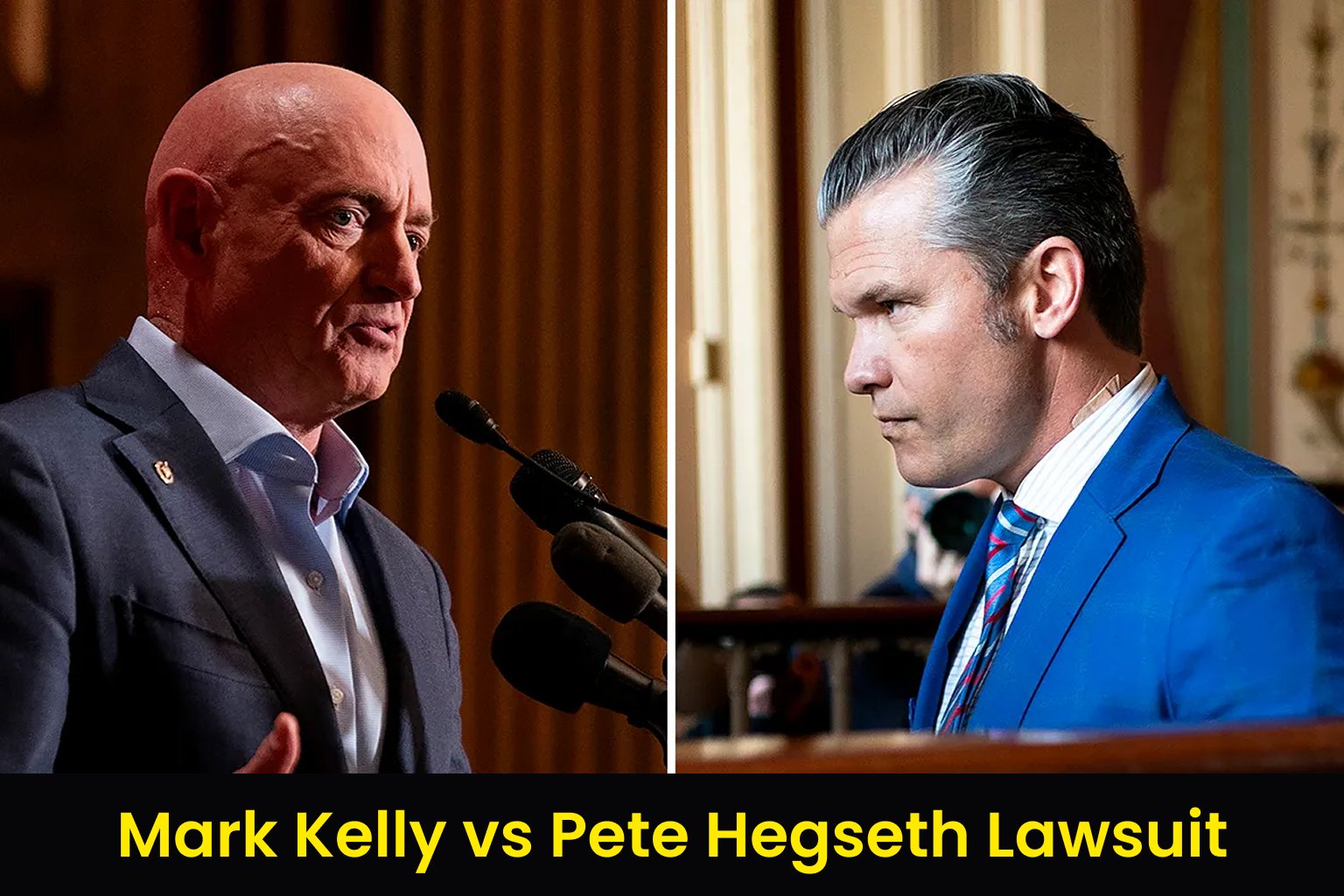
The Mark Kelly vs Pete Hegseth lawsuit has escalated into a significant constitutional battle as Senator Mark Kelly’s legal team filed federal litigation Monday to protect military retiree free speech rights. The lawsuit directly challenges Defense Secretary Pete Hegseth’s unprecedented attempt to strip Kelly’s retirement benefits and military rank over a video encouraging service members to refuse illegal orders.
Legal Team Files Emergency Injunction to Block Punishment
Kelly’s attorneys filed the lawsuit seeking immediate court intervention to prevent Hegseth from cutting the senator’s retirement pay and reducing his military rank. The legal action argues that punishing Kelly violates fundamental First Amendment protections and threatens to silence future legislative oversight of military operations.
“If permitted to stand, the Secretary’s censure and the grade-determination proceedings that he has directed will inflict immediate and irreparable harm,” the lawsuit states. The filing emphasizes that official punishment for protected speech will “chill legislative oversight and threaten reductions in rank and pay.”
Pentagon Remains Silent on Constitutional Challenge
Hegseth has declined to respond to requests for comment regarding the lawsuit. Pentagon officials confirmed awareness of the litigation but maintained their standard policy of refusing to comment on ongoing legal proceedings. A Pentagon spokesperson told CNN, “We are aware of the litigation. However, as a matter of policy, the Department does not comment on ongoing litigation.”
Background of the Military Retiree Free Speech Rights Dispute
Controversial Video Sparks Administrative Action
The Mark Kelly vs Pete Hegseth lawsuit stems from administrative actions Hegseth announced following Kelly’s participation in a November video. Kelly joined five other lawmakers with military backgrounds in urging service members to refuse unlawful orders potentially issued by the Trump administration.
Hegseth’s response included multiple punitive measures:
- Reducing Kelly’s retirement pay as a Navy captain
- Issuing an official secretarial letter of censure
- Initiating grade-determination proceedings
Hegseth Accuses Kelly of Counseling Insubordination
The Defense Secretary’s letter of censure, obtained by CNN, directly accused Kelly of intentionally encouraging military disobedience. Hegseth wrote: “When viewed in totality, your pattern of conduct demonstrates specific intent to counsel servicemembers to refuse lawful orders. This pattern demonstrates that you were not providing abstract legal education about the duty to refuse patently illegal orders.”
Trump amplified the controversy through social media posts, claiming the lawmakers “should be in jail right now” and labeling their actions as “sedition.”
Legal Experts Challenge Pentagon’s Authority
Former Military Lawyers Question Hegseth’s Actions
Rachel VanLandingham, a former Air Force Judge Advocate and current Southwestern Law School professor, strongly criticized Hegseth’s approach. She emphasized that military retiree free speech rights include protection from rank reduction for post-retirement political speech.
“There is no legal basis for knocking a retired officer down in rank for actions like Kelly’s after their retirement,” VanLandingham stated, calling Hegseth’s efforts an “abuse of power.”
Limited Circumstances for Rank Reduction
VanLandingham outlined the narrow legal grounds for reducing a retired officer’s rank:
- Conviction in a court martial (requiring return to active duty)
- Civilian court conviction for serious crimes like espionage
- Misconduct that occurred while on active duty
Since Kelly’s video participation occurred years after his 2011 retirement, none of these circumstances apply to his situation.
Constitutional Implications of the Lawsuit
First Amendment and Legislative Immunity at Stake
The Mark Kelly vs Pete Hegseth lawsuit raises critical questions about constitutional protections for elected officials. Kelly’s legal team argues that his actions represent “quintessential legislative and oversight activity” protected by legislative immunity.
The lawsuit emphasizes that Hegseth’s actions “erode the separation of powers” by punishing a sitting Senator through military proceedings for political speech. This unprecedented use of military administrative power against a current legislator threatens the constitutional balance between branches of government.
Chilling Effect on Military Oversight
Legal experts warn that allowing Hegseth’s punishment to proceed would create a dangerous precedent. The lawsuit argues that retaliation through military channels sends a clear message that “criticism of the Executive’s use of the armed forces may be met with retaliation.”
Personal Confrontation Between Kelly and Hegseth
Classified Briefing Erupts in Accusations
The tension in the Mark Kelly vs Pete Hegseth lawsuit extends beyond legal documents into personal confrontations. During a classified Senate briefing, Kelly questioned Hegseth about operational matters when the Defense Secretary shifted to attacking Kelly personally.
According to witnesses, Hegseth accused Kelly of “hurting unit cohesion and undermining the chain of command” while Kelly attempted to focus on legitimate oversight questions. The exchange highlighted the personal animosity underlying the legal dispute.
Military Legal Education and Standard Practice
Video Content Reflects Standard Military Training
Legal experts defend the content of Kelly’s controversial video as entirely consistent with standard military legal education. VanLandingham explained that the lawmakers’ message was “not different whatsoever” from routine military lawyer briefings.
“What they said was just a generalized version of what military lawyers brief, what folks in basic training are briefed on, folks at professional military education courses are briefed on,” she noted. The video content fell “well within the framework of an appropriate articulation of the law.”
Legislative Duty and Military Oversight
The lawsuit emphasizes that Kelly’s participation was “well within their duties as sitting senators and representatives to reiterate this advice, because they’re responsible for the law that these service members were supposed to be following.”
Kelly’s Response to Hegseth’s Threats
Senator Defends 25 Years of Military Service
Kelly issued a strong statement Monday defending his military career and constitutional rights. “Pete Hegseth is coming after what I earned through my twenty-five years of military service,” Kelly declared.
The senator warned of broader implications for military retiree free speech rights: “Pete Hegseth wants our longest-serving military veterans to live with the constant threat that they could be deprived of their rank and pay years or even decades after they leave the military just because he or another secretary of defense doesn’t like what they’ve said.”
Kelly concluded with a firm stance: “That’s not the way things work in the United States of America, and I won’t stand for it.”
Implications for Military Retiree Free Speech Rights
Precedent-Setting Constitutional Battle
The Mark Kelly vs Pete Hegseth lawsuit represents a watershed moment for military retiree free speech rights. The outcome will determine whether retired military officers maintain full First Amendment protections or face ongoing military control over their civilian political participation.
Legal scholars emphasize that allowing Hegseth’s punishment to proceed would fundamentally alter the relationship between retired military personnel and their constitutional rights, potentially silencing thousands of veterans who serve in elected office or engage in political advocacy.
Broader Impact on Civil-Military Relations
The lawsuit’s resolution will significantly impact civil-military relations and the separation of powers. If military leaders can punish retired officers for political speech decades after service, it raises serious questions about military interference in civilian governance.
The Mark Kelly vs Pete Hegseth lawsuit thus stands as a critical test of constitutional principles, military retiree free speech rights, and the proper boundaries of military authority in American democracy.