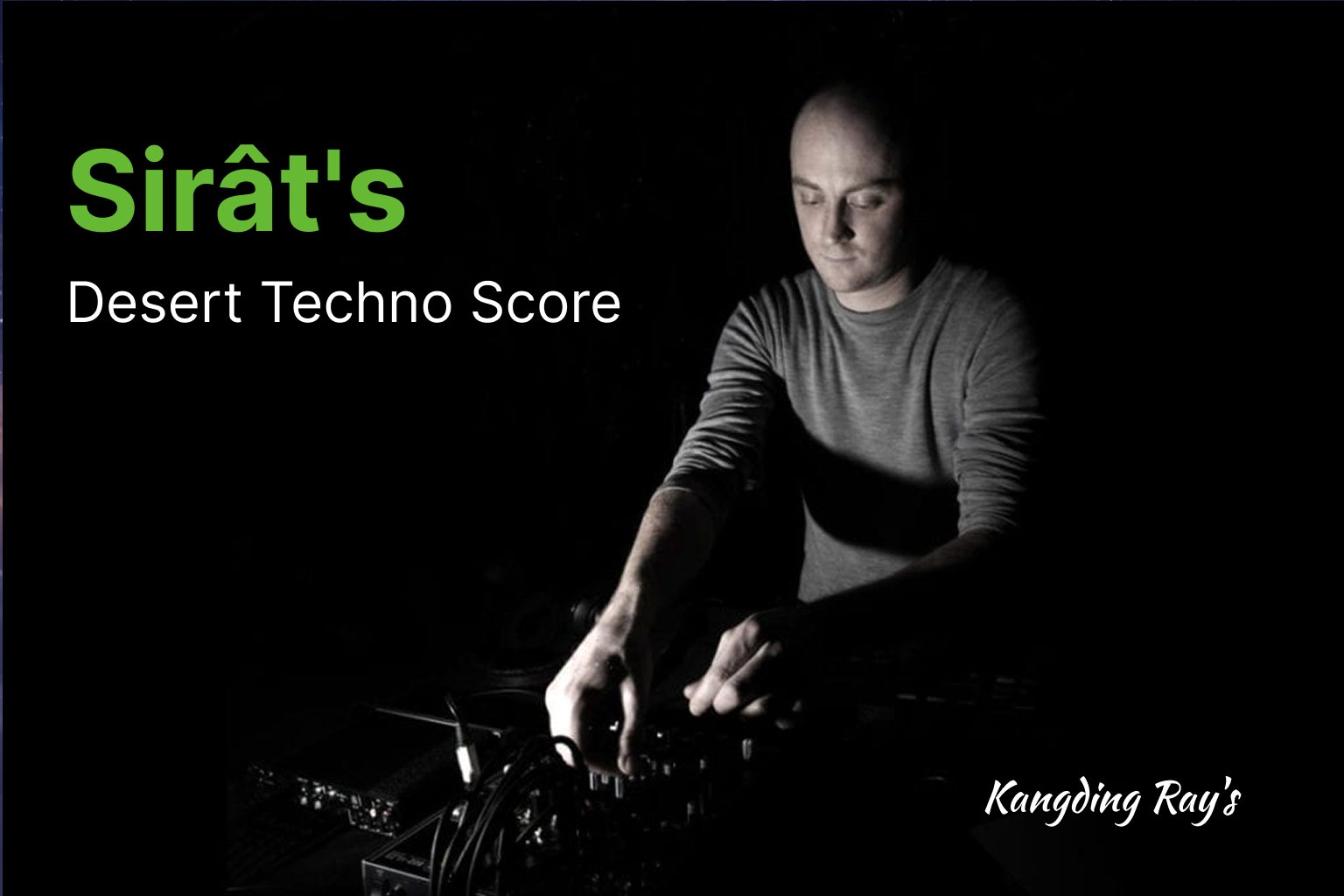
Composer Kangding Ray Discusses Creating an Oscar-Shortlisted Techno Soundtrack That Transcends Cultural Boundaries
Oliver Laxe’s critically acclaimed film “Sirât” showcases an extraordinary fusion of music and storytelling, with composer Kangding Ray crafting a techno-driven score that explores profound culture difference through sound. The Oscar-shortlisted film demonstrates how electronic music can bridge cultural gaps while serving as a powerful narrative device.
The Ambitious Vision Behind Sirât’s Revolutionary Score
“Sirât” earns Oscar recognition across multiple categories, including cinematography, international feature, sound design, and original score. The film presents an ambitious narrative following Luis (Sergi López) and his son Esteban (Brúno Nuñez) as they search Morocco’s desert mountains for Luis’s missing daughter, Mar, who disappeared from a rave five months earlier.
Ray describes the project as both ambitious and radical, explaining how the script immediately captured his attention despite initial reservations about its bold approach.
Electronic Music as Cultural Bridge: From Script to Synthesizer
Creating Desert Soundscapes Through Modular Synthesis
Ray’s innovative approach involved scoring directly from the script rather than finished footage. Using modular synthesizers, he crafted abstract soundscapes that capture the vastness of Morocco’s desert landscape. This electronic music approach allows for unprecedented creative freedom, as Ray explains that electronic composition removes preconceived notions about traditional musical boundaries.
The composer’s technique involves:
- Direct manipulation of waveforms
- Layering natural desert sounds with synthetic elements
- Creating seamless transitions between techno and ambient compositions
The 17-Minute Rave Sequence: Techno as Narrative Foundation
The film opens with an extended 17-minute rave sequence that establishes techno music as a central character. Ray found this portion relatively straightforward given his background in electronic music, but the real challenge emerged in transitioning from high-energy techno to ethereal, ambient soundscapes.
Navigating Musical Transitions That Reflect Emotional Journey
The score’s evolution mirrors the characters’ psychological transformation from hope to despair. Ray meticulously crafted these transitions to support narrative elements that dialogue alone couldn’t convey. The most challenging sequence involved scoring a tragic minefield explosion, requiring Ray to create what he describes as a “giant monster” sound that captures the desert’s overwhelming scale.
Culture Difference Explored Through Musical Philosophy
“Music’s Not for Listening, It’s for Dancing”
A pivotal moment in the film occurs when character Jade declares that “music’s not for listening, it’s for dancing.” This line encapsulates the fundamental culture difference between generations and worldviews. Ray explains how this moment represents Luis’s sudden understanding of his daughter’s relationship with electronic music culture.
The scene reveals:
- Generational gaps in musical appreciation
- Different cultural approaches to music consumption
- The transformative power of understanding diverse musical perspectives
Collaborative Sound Design: Merging Analog and Digital Approaches
Working with Sound Designer Laia Casanova
Ray’s collaboration with sound designer Laia Casanova created a seamless marriage between score and environmental audio. Casanova’s purist approach involved analog recordings of desert sounds, rattles, and rave atmosphere, which blended naturally with Ray’s electronic compositions.
This collaborative process demonstrates how music and sound design can work together to create immersive cultural experiences that transcend traditional filmmaking boundaries.
The Technical Craft: Synthesizers as Desert Instruments
Modular Synthesis Techniques for Atmospheric Creation
Ray’s use of modular synthesizers allows for direct manipulation of sound fabric itself. This approach enables:
- Organic integration of natural desert sounds
- Creation of textures that represent vast landscapes
- Seamless blending of electronic and environmental audio elements
The composer emphasizes how electronic music production removes traditional limitations, allowing natural sounds to become both inspiration and direct sonic sources.
From Script to Screen: The Evolution of Musical Vision
Remarkably, Ray’s script-based compositions required minimal adjustment when matched with final footage. Only 10-20% of the score needed modification, demonstrating the strength of the original vision and the effectiveness of the collaborative process between composer and director.
Cultural Understanding Through Electronic Music
Breaking Down Musical Barriers
“Sirât” ultimately explores how music can bridge culture difference while highlighting the distinct ways different generations and cultures experience electronic music. The film shows Luis’s journey from annoyance with techno music to understanding its deeper cultural significance for his daughter and her generation.
The score illustrates:
- How electronic music creates community bonds
- The role of music in cultural identity formation
- The potential for musical understanding to bridge generational gaps
The Universal Language of Electronic Composition
Ray’s work on “Sirât” demonstrates how contemporary electronic music can serve as both a specific cultural marker and a universal language. By combining traditional film scoring techniques with innovative synthesis methods, the composer creates a soundtrack that honors both Moroccan desert culture and global electronic music communities.
The film’s Oscar recognition validates the effectiveness of this approach, showing how thoughtful integration of music and culture difference can create powerful cinematic experiences that resonate across diverse audiences.
Through innovative synthesis techniques and cultural sensitivity, Kangding Ray’s score for “Sirât” establishes new possibilities for electronic music in cinema while exploring the complex relationships between music, culture, and human understanding.