Netanyahu Declares Close Surveillance as Demonstrations Intensify Across Islamic Republic
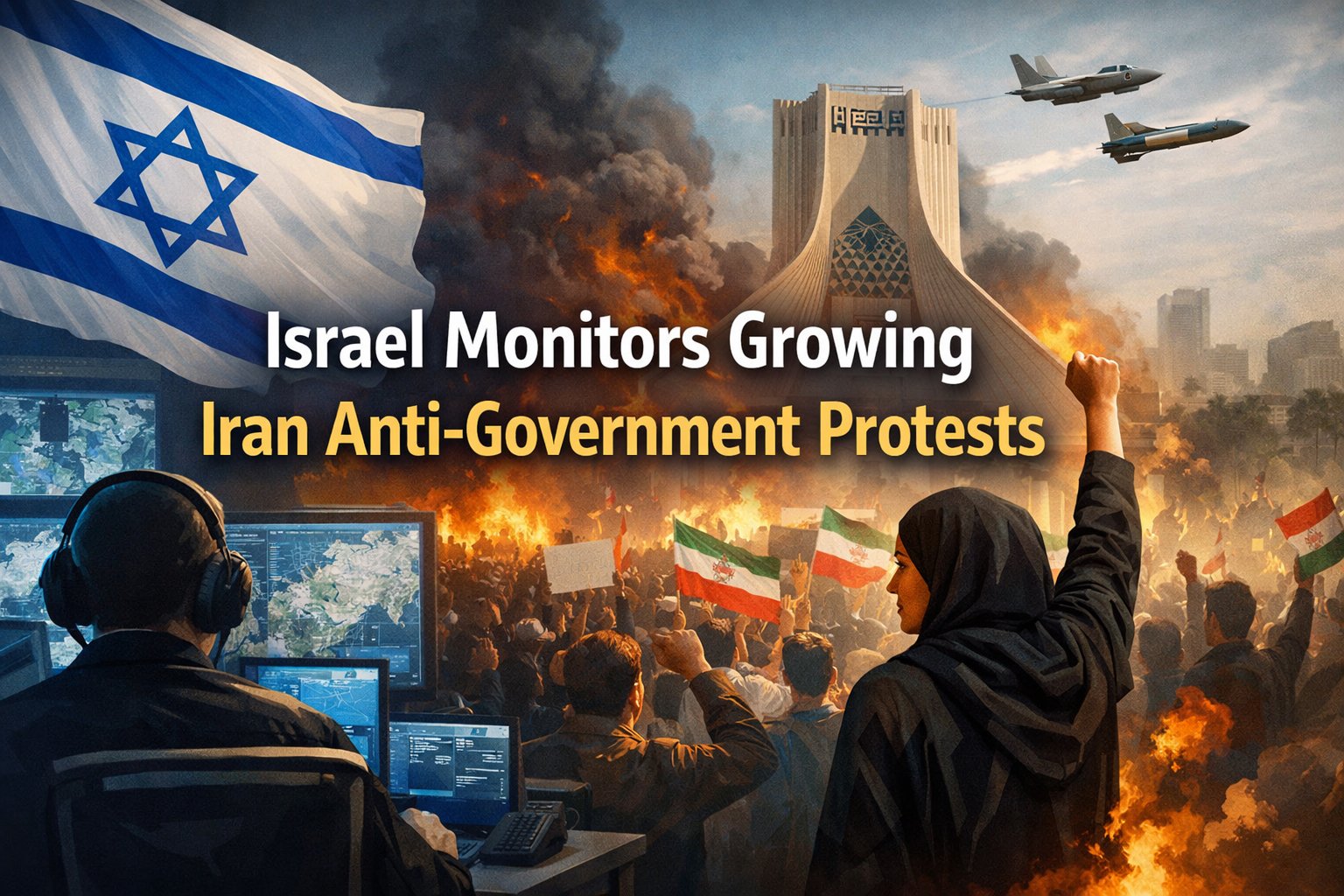
The Iran Anti-Government Protests continue to gain momentum across the Islamic Republic, prompting Israeli Prime Minister Benjamin Netanyahu to announce that his government maintains close surveillance of the developing situation. These demonstrations occur against the backdrop of ongoing regional instability that experts warn could influence the trajectory of the Israel-Iran Conflict 2026 scenario.
Israeli Leadership Expresses Support for Iranian Citizens
During Sunday’s weekly cabinet meeting, Netanyahu praised the courage of Iranian protesters while condemning the regime’s violent crackdown on civilians. “The people of Israel, the entire world, are in awe of the tremendous heroism of the citizens of Iran,” Netanyahu stated, expressing hope for future diplomatic relations once Iran achieves freedom from authoritarian rule.
The Israeli Prime Minister engaged in overnight discussions with U.S. Secretary of State Marco Rubio regarding multiple regional issues, including the Iranian situation, according to anonymous Israeli officials familiar with the conversations.
Military Preparedness Without Immediate Escalation
Despite closely monitoring the Iran Anti-Government Protests, Israeli military officials confirm no new civilian protection protocols have been implemented. Citizens receive no additional instructions to remain near bomb shelters, indicating the absence of immediate missile threat concerns.
The Israeli Defense Forces characterize the Iranian protests as “an internal Iranian matter” while maintaining readiness to “respond with power if need be.” This measured stance reflects Israel’s cautious approach to the volatile regional situation.
Strategic Calculations Shape Israeli Response
Intelligence Community Advises Restraint
Former Israeli intelligence officer Danny Citrinowicz, who previously led Iran research within military intelligence divisions, argues against Israeli military intervention despite Iran’s apparent vulnerability. Currently serving as a senior researcher at the Institute for National Security Studies, Citrinowicz emphasizes that Iranian leadership prioritizes domestic stability over external conflicts.
“From an Iranian standpoint, the last thing Iran wants to see is diverting their attention towards Israel,” Citrinowicz explains. “Their priority, first and foremost, is to retrieve the calmness and stability in Iran.”
Neither Nation Seeks Military Confrontation
The current uncertainty surrounding Iran’s political situation encourages Israeli restraint as officials adopt a wait-and-see approach. Both nations appear reluctant to initiate another military confrontation similar to the devastating 12-day conflict that occurred during the summer.
That previous war began when Israel targeted Iranian nuclear and military installations, citing concerns about Tehran’s atomic weapons development. Iran consistently maintains its nuclear program serves peaceful purposes only.
Casualties and Consequences of Previous Conflicts
The summer conflict resulted in significant casualties on both sides. Israeli strikes on Iranian territory killed 1,190 people and wounded an additional 4,475, according to the U.S.-based Human Rights Activists News Agency. Iranian missile attacks killed nearly 30 Israelis and wounded approximately 1,000 others.
These devastating losses underscore the potential consequences of escalating tensions, particularly as the Iran Anti-Government Protests continue developing across the Islamic Republic.
Parliamentary Tensions and American Warnings
Iranian Leadership Issues Threats
Iranian Parliament Speaker Mohammad Bagher Qalibaf escalated rhetoric on Sunday, declaring U.S. military forces and Israel would become “legitimate targets” should America attack Iran. This statement accompanied dramatic scenes in the Iranian parliament, where lawmakers rushed the podium chanting “Death to America!”
Trump Administration Responds Firmly
President Trump’s administration issued clear warnings about the consequences of threatening American interests. “Do not play games with President Trump. When he says he’ll do something, he means it,” the State Department declared Saturday, referencing Trump’s history of following through on military threats.
Expert Analysis on Intervention Risks
Potential Backfire of External Military Action
Intelligence experts warn that American or Israeli military intervention could actually strengthen the Iranian regime by fostering nationalist unity against foreign enemies. Such intervention might paradoxically weaken the Iran Anti-Government Protests by shifting public focus from domestic grievances to external threats.
The United States previously supported Israel during the summer conflict by providing bunker-buster bombs used against Iranian nuclear facilities, enabling Netanyahu to declare mission success and accept subsequent ceasefire arrangements.
Israeli Strategic Priorities and Limitations
Focus on Security Rather Than Regime Change
Hebrew University of Jerusalem Iran expert Menahem Merhavy explains that Israeli concerns center primarily on ballistic missile threats rather than Iran’s governmental structure. “What Israel is really concerned with is ballistic missiles, and stuff like that, not what kind of regime is going to be in Iran,” Merhavy notes.
“Unless there’s something really dramatic happening with missiles, I don’t see Israel stepping into this,” he adds, emphasizing Israel’s reluctance to intervene in internal Iranian affairs.
Calculated Non-Interference Policy
Israeli analysts believe any Iranian attack during the current protest period would constitute “a suicide note for the regime.” International sympathy for the Iran Anti-Government Protests would likely result in minimal global opposition to strong Israeli retaliation against Iranian leadership.
While Israel could potentially provide marginal assistance such as internet access to protest leaders, experts consider even such limited involvement unlikely.
Regional Implications and Future Scenarios
The ongoing Iran Anti-Government Protests create unprecedented complexity for regional powers navigating potential conflicts. As tensions continue evolving, the specter of broader confrontation reminiscent of Israel-Iran Conflict 2026 scenarios remains a constant concern for international observers.
Israeli policy makers maintain their non-interference stance while remaining prepared for any escalation that might threaten national security interests. This delicate balance reflects the challenging dynamics facing Middle Eastern nations amid continuing political upheaval and regional instability.
The international community watches closely as events unfold, understanding that developments in Iran could significantly impact regional security architecture and influence future diplomatic relationships throughout the Middle East.