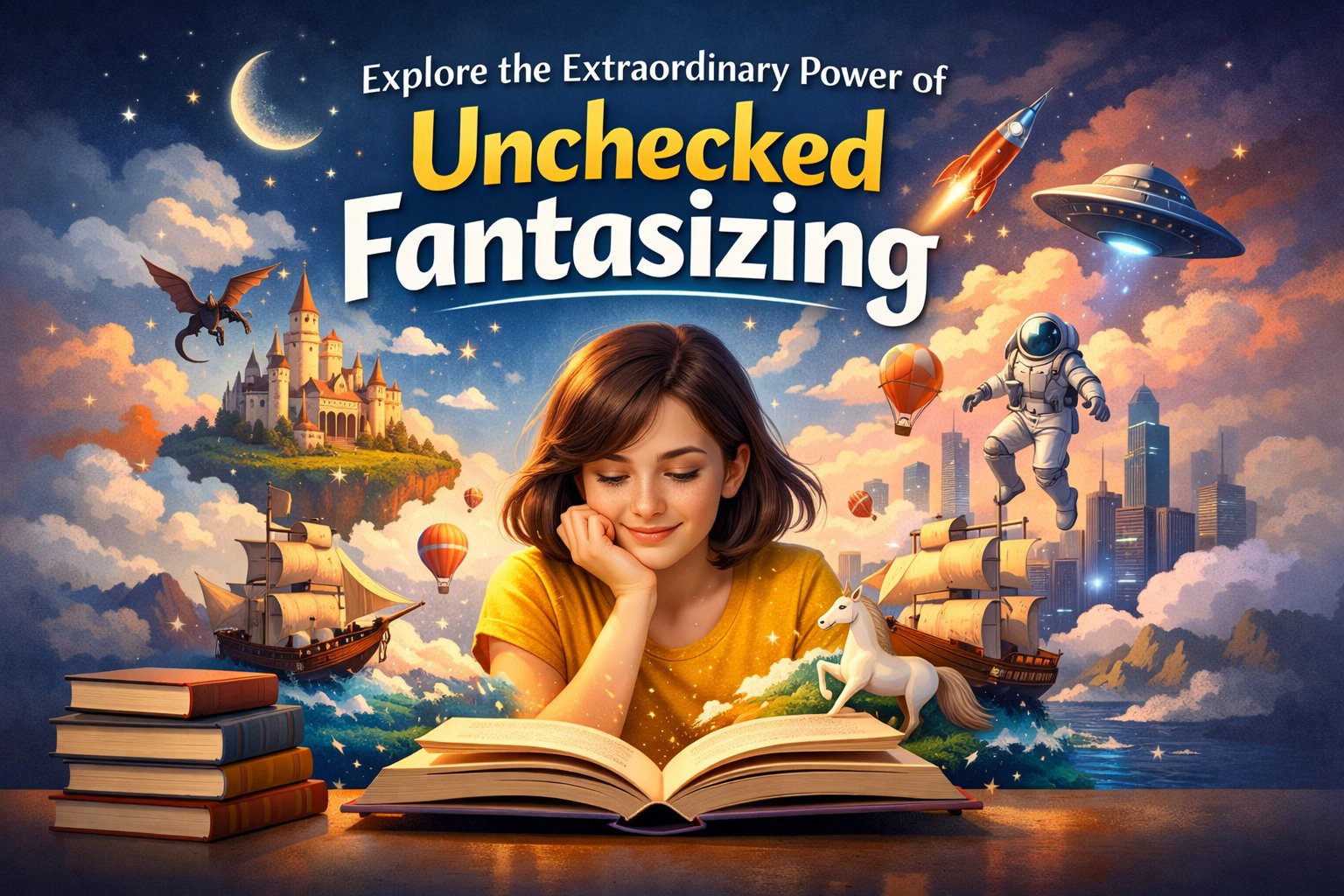
Discover Literary Masterpieces That Reveal How Daydreaming Can Transform Lives
The Allure of Escape: Why We Turn to Fantasy
Countless individuals—whether overwhelmed, dissatisfied, or understimulated—harbor an intense yearning to escape their current reality. While physically abandoning one’s circumstances rarely proves practical or achievable, daydreaming offers an infinite sanctuary of possibilities. Within these mental landscapes, anyone can achieve fame or fortune, capture their beloved’s attention, or simply relax on pristine beaches while waiters deliver endless cocktails. These imaginary realms allow people to soar through skies, communicate with animals, perform heroic rescues, confront authority figures without consequences, score winning touchdowns, or traverse distant continents, planets, and time periods. In this boundless mental territory, no limitations exist—no one possesses the power to interfere or protest.
Certain authors gravitate naturally toward exploring such reveries. These literary daydreams can expose our hidden, rebellious, or alluring tendencies while revealing profound truths about our conscious existence. Writers who chronicle characters refusing to accept reality’s constraints create remarkably engaging narratives. The Six Books featured below masterfully examine what occurs when speculation and wishful thinking infiltrate actual life, demonstrating the power—both good and bad—of unchecked fantasizing.
Six Literary Masterworks Exploring Fantasy’s Complex Nature
1. Y/N by Esther Yi: When Fan Fiction Becomes Reality
Yi’s captivating 2023 novel derives its title from a specific fanfiction format where protagonists bear the designation “Y/N” or “your name.” The anonymous narrator attends a K-pop concert in Berlin and develops an overwhelming fixation on Moon, the band’s youngest member—described as “a gift forever in the moment of being handed over.”
As her obsession intensifies, she creates Y/N fan fiction featuring Moon, with extensive excerpts woven throughout the narrative. Moon’s sudden retirement prompts the narrator’s journey to Korea in pursuit of him. Rather than delivering expected criticism of fan culture and celebrity worship, Yi crafts a more profound and provocative exploration of love, human connection, and artistic expression. Even after locating Moon, the narrator’s true motivations remain mysterious, suggesting that the fantasy itself serves as the ultimate purpose.
2. Hangsaman by Shirley Jackson: Trauma and Liberation Through Imagination
Jackson’s compelling narrative follows Natalie, a writer’s daughter, through her psychological deterioration during her inaugural college semester. Initially, Natalie escapes her family home’s suffocating atmosphere by retreating into imaginary realms filled with vivid, sexualized violence. However, a sexual assault at a family gathering precedes her college departure, leading to three claustrophobic months on campus.
The traumatized Natalie struggles to form peer connections, associates with her professor’s alcoholic wife, and ultimately befriends a peculiar figment of her imagination. This horror-tinged examination reveals how mid-century sexual politics pressure women, while Natalie’s disturbing hallucination represents an unexpected avenue to freedom, enabling her to reject societal and parental expectations.
3. Northanger Abbey by Jane Austen: Gothic Romance Meets Reality
While featuring Austen’s characteristic marriage plot, Northanger Abbey distinguishes itself through an extended satirical critique of gothic fiction and its enthusiasts. The protagonist, Catherine Morland, devours popular contemporary novels, particularly Ann Radcliffe’s 1794 bestseller “The Mysteries of Udolpho,” featuring ghostly apparitions and concealed documents.
Catherine reimagines herself as a similar story’s heroine, and her visit to the titular Northanger Abbey transforms her into a mystery’s protagonist. Austen expertly portrays social missteps as Catherine commits numerous blunders—forcing open cabinets seeking sinister documents and suspecting the family patriarch of murdering his wife. Chronic daydreamers will recognize Catherine’s almost delusional desire for excitement beyond conventional courtships and musical evenings that appear to define her future.
4. Jonathan Abernathy You Are Kind by Molly McGhee: Dreams as Corporate Commodities
McGhee’s humorous yet poignant novel centers on Abernathy, an ordinary man suffocating under massive debt from student loans and deceased parents’ bills. Desperately seeking payment solutions, he accepts a questionable government position as a dream auditor, earning $20 nightly plus substantial debt reduction for entering corporate workers’ dreams and identifying productivity-damaging anxieties.
His superiors literally vacuum away flagged negative emotions and thoughts, prompting Abernathy to question these removals’ impact on human psychology. McGhee creates a dark universe where exhausted sleepers experience grief and worry, delivering humor and anticapitalist commentary reminiscent of George Saunders and Karen Russell. The affable Abernathy ultimately finds redemption while the story fully explores what happens when dreams face systematic destruction.
5. Quichotte by Salman Rushdie: Television-Age Delusions
Rushdie’s expansive picaresque novel reimagines Don Quixote in a contemporary setting where politics becomes spectacle and the protagonist’s delusions center on television. Quichotte pursues Salma R, a daytime talk show host positioned as Oprah’s successor, while his imagined fifteen-year-old son Sancho—manifested from early television’s black-and-white static—accompanies him as a passenger.
Sam DuChamp, a mid-tier spy novelist attempting literary fiction, writes Quichotte’s quest story in alternating chapters. As DuChamp dreams about this classic dreamer, he incorporates his personal biography and disappointments, layering imagination upon memory to examine humanity’s tendency toward mythologization.
6. The Lathe of Heaven by Ursula K. Le Guin: Dreams That Reshape Reality
Set in Portland, Oregon’s bleak, overpopulated future, Le Guin’s masterpiece addresses the seemingly mundane question: “What if dreams became reality?” Her protagonist, George Orr—described as “milquetoast, repressed, conventional”—possesses the ability to rewrite reality through dreaming, altering both past and present.
When therapy addresses his drug addiction, Dr. Haber discovers he can suggest dreams achieving various objectives. However, these dreams produce unintended consequences, and Haber proves an unreliable guardian of Orr’s gift. His population problem solution creates a devastating pandemic, while his Earth peace request introduces alien interference. Le Guin examines unchecked authority, eugenics, and governmental ethics in this inventive, consistently surprising exploration of attempting to manifest improved realities.
The Transformative Power of Literary Fantasy
These Six Books demonstrate that unchecked fantasizing possesses tremendous power—both good and bad—capable of sustaining individuals throughout their lives while potentially transforming them for better or worse. Each work pushes boundaries and conventions surrounding fantasy, revealing both the limitations and dangers of dreaming while celebrating imagination’s extraordinary capacity to illuminate human nature’s deepest truths.
Through masterful storytelling, these authors prove that exploring the realm between reality and imagination offers profound insights into the human condition, making these literary works essential reading for anyone seeking to understand fantasy’s complex role in shaping our lives.