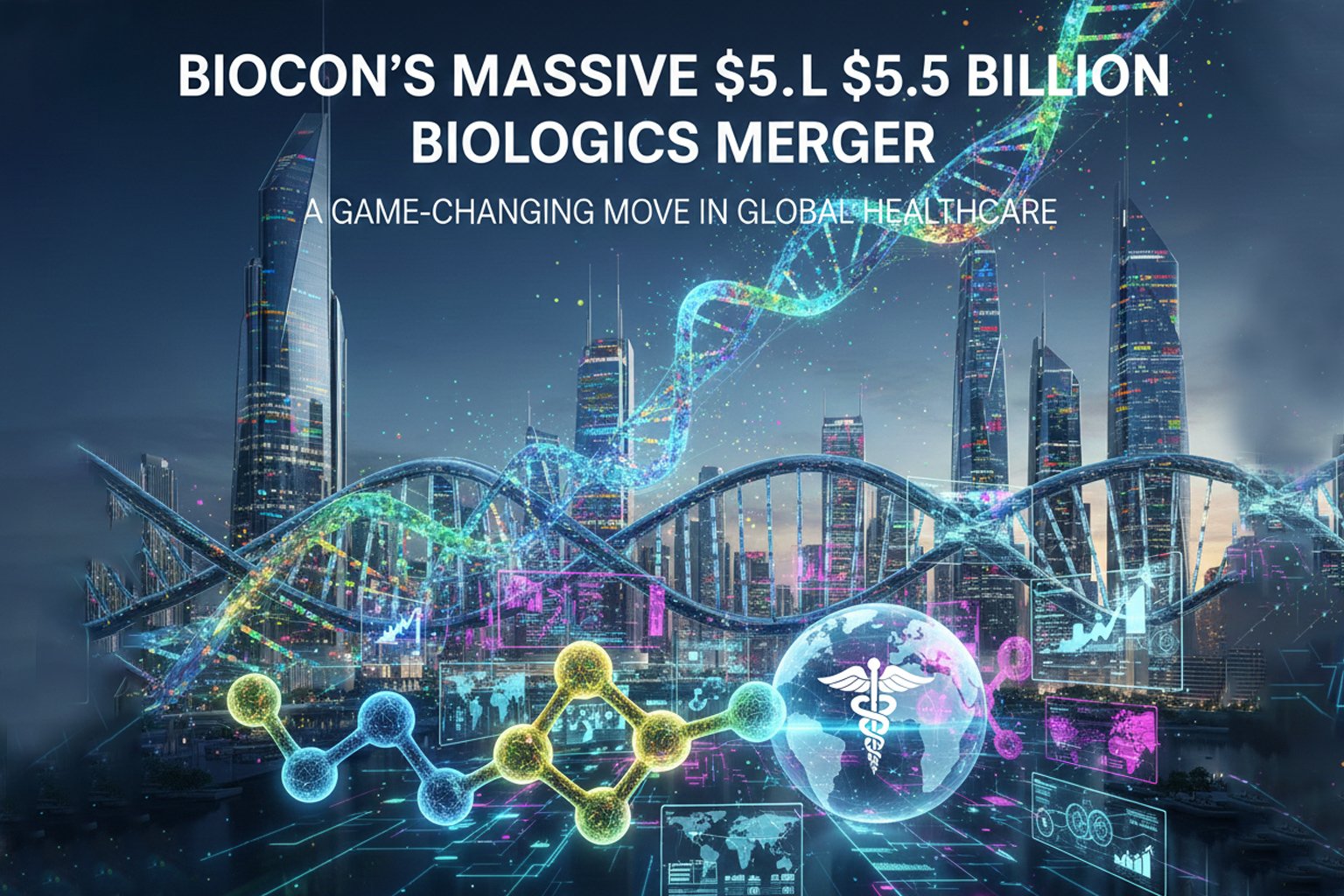
Imagine combining two powerful forces in the world of medicine to create something even STRONGER. That’s exactly what’s happening with Biocon, one of India’s leading pharmaceutical companies, as they announce a groundbreaking merger deal worth $5.5 billion. This isn’t just another business transaction – it’s a REVOLUTIONARY move that could change how we think about affordable healthcare around the world.
The merger involves Biocon’s biologics division, which focuses on creating life-saving medications for serious diseases like cancer & diabetes. By joining forces with another major player in the industry, Biocon is positioning itself to become a GLOBAL powerhouse in the biologics market. But what does this mean for patients, investors, & the healthcare industry as a whole?
This article will take you on a journey through the details of this massive deal, exploring why it matters so much & how it could impact millions of people worldwide. We’ll break down the complex world of biologics in simple terms, examine the strategic REASONS behind this merger, & discuss what challenges & opportunities lie ahead. Whether you’re interested in business, healthcare, or just curious about how big companies make decisions that affect our lives, this story has something FASCINATING for everyone.
Understanding the World of Biologics & Why They Matter
Before diving into the merger details, let’s talk about what biologics actually are & why they’re so IMPORTANT in today’s medical world. Unlike traditional pills that are made from chemicals in a laboratory, biologics are special medicines created from living things like bacteria, yeast, or even human cells. Think of them as nature’s own pharmacy, where scientists use living organisms to create powerful treatments for diseases that were once considered untreatable.
These medications are particularly effective for treating complex conditions such as rheumatoid arthritis, various types of cancer, inflammatory bowel disease, & autoimmune disorders. The process of making biologics is much more COMPLICATED than creating regular medicines, which is why they often cost more money. However, they can be incredibly effective for patients who haven’t responded well to traditional treatments.
Biocon has been a PIONEER in the biologics space, especially in creating biosimilars – which are essentially generic versions of expensive biologic drugs. Just like how generic versions of regular medicines help make healthcare more affordable, biosimilars do the same thing for these advanced treatments. This is particularly important in countries like India, where millions of people need access to life-saving medications but can’t afford the high prices of original biologics.
The company’s focus on biologics has made them a MAJOR player not just in India, but also in markets across Asia, Europe, & even the United States. Their success in this area is one of the key reasons why this merger deal is so significant & valuable.
The Strategic GENIUS Behind the $5.5 Billion Deal
So why would Biocon decide to merge their biologics unit in such a massive deal? The answer lies in the changing landscape of the global pharmaceutical industry & the need for SCALE in today’s competitive market. When companies combine their resources, expertise, & market reach, they can achieve things that would be impossible on their own.
This merger will allow Biocon to access new markets more easily, share research & development costs with their partner, & speed up the process of bringing new treatments to patients. Think of it like two talented basketball players deciding to play on the same team instead of competing against each other – together, they can win championships that neither could achieve alone. The biologics market is GROWING rapidly as more people around the world need these specialized treatments, & companies need to be big enough to compete effectively.
From a financial perspective, the $5.5 billion valuation shows just how VALUABLE Biocon’s biologics division has become. This represents years of investment in research, manufacturing facilities, regulatory approvals, & building relationships with healthcare providers around the world. The merger partner is essentially paying for all of this expertise & infrastructure, plus the potential for future growth & profits.
The deal also provides Biocon with significant cash that can be invested in other areas of their business, such as developing new medicines or expanding into different therapeutic areas. This strategic flexibility is CRUCIAL in an industry where companies need to constantly innovate & adapt to changing patient needs & market conditions.
Challenges & Opportunities in the Global Biologics Market
While this merger represents an exciting OPPORTUNITY, it also comes with significant challenges that both companies will need to navigate carefully. The biologics market is highly regulated, with strict requirements for manufacturing, quality control, & clinical testing. When two companies merge their operations, they need to ensure that all of these standards are maintained while also finding ways to work together efficiently.
One of the biggest challenges will be integrating different company cultures, manufacturing processes, & regulatory strategies. Each company has its own way of doing things, & finding the best approach that combines their STRENGTHS while eliminating weaknesses will require careful planning & execution. This is particularly important in the biologics industry, where even small changes in manufacturing processes can affect the safety & effectiveness of medications.
However, the opportunities far outweigh the challenges. The global biologics market is expected to continue GROWING rapidly as populations age & more people develop chronic diseases that require these specialized treatments. By combining their resources, the merged entity will be better positioned to compete with larger multinational pharmaceutical companies & expand into new geographical markets.
The merger also creates opportunities for innovation, as the combined company will have access to a larger pool of scientific talent, research capabilities, & financial resources. This could lead to the development of new biosimilars & even novel biologic treatments that could help millions of patients WORLDWIDE.
Looking Ahead: What This Means for the Future
As we consider the implications of Biocon’s $5.5 billion biologics merger, it’s clear that this deal represents much more than just a business transaction. It’s a BOLD statement about the future of affordable healthcare & the role that innovative companies can play in making life-saving treatments accessible to people around the world.
For patients, this merger could mean faster access to new biosimilar treatments & potentially lower costs as the combined company achieves greater efficiency & scale. For investors, it demonstrates the tremendous VALUE that exists in the biologics market & the potential for continued growth in this sector. For the broader pharmaceutical industry, it shows how strategic partnerships & mergers can create POWERFUL entities capable of competing on a global scale.
The success of this merger will likely influence other companies in the industry to consider similar strategic moves. As the biologics market continues to evolve, we can expect to see more consolidation & collaboration between companies that share similar goals of making advanced treatments more accessible & affordable.
What questions does this raise for you about the future of healthcare? How do you think mergers like this will impact the availability & cost of medications in your own community? The answers to these questions will depend largely on how well companies like Biocon execute their strategic visions & remain committed to their mission of improving GLOBAL health outcomes. This $5.5 billion deal is just the beginning of what could be a transformative period in the world of biologics & beyond.