
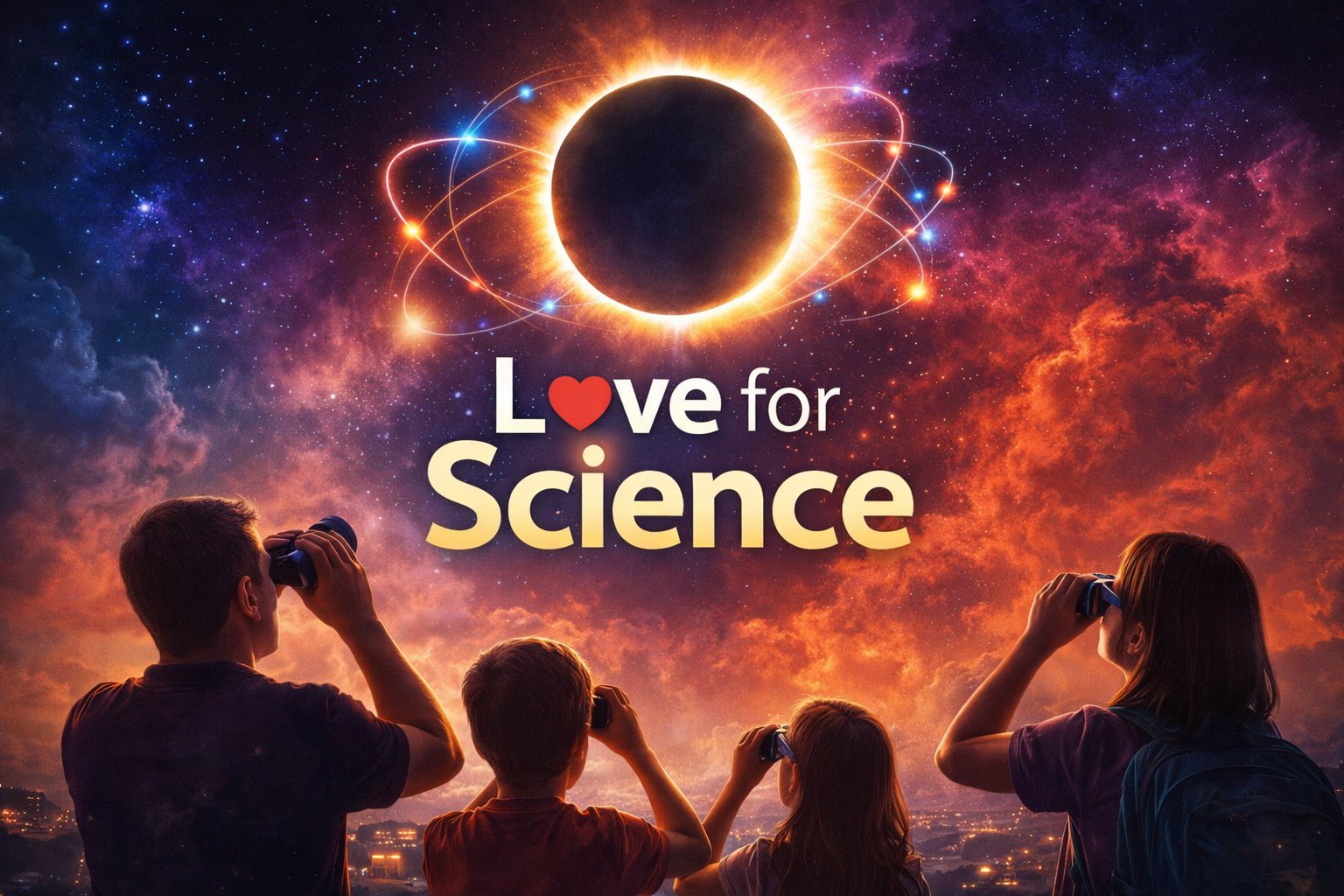
For the first time in nearly a century, a total solar eclipse will cross only the United States. This highly anticipated event will happen on August 21. A 65-mile-wide path of total darkness will sweep across the country.
This darkness, known as the “path of totality,” happens when the moon completely blocks the sun, leaving only the sun’s outer edge, or corona, visible. The event will begin on the Oregon coast around 10 a.m. It will then travel fast—at about 1,700 miles per hour—before ending near the South Carolina coast close to 3 p.m.
The “Great American Eclipse”
How do we know all these exact details? The answer is science. People who are passionate about science are incredibly excited right now. NASA estimates that around 50 million people live within a short drive of the path of totality. Because of this, experts expect “The Great American Eclipse” to have the most eyewitnesses of any total eclipse in human history. (Just remember to use certified viewing glasses to protect your eyes!)
This rare event will also impact the natural world. In any given location, the total eclipse will only last for two to three minutes. Scientists are not entirely sure how this sudden darkness will affect plants and animals. Right now, most stories about animal behavior during an eclipse are just personal observations, not hard data.
However, past eclipses give us some clues. There is evidence that birds might suddenly fly back to their nests. Cattle might walk toward their barns, thinking it is nighttime. Even plants that react to light, like poppies, might close their petals as the day quickly turns dark.
Gathering Data on Nature
Scientists want to change the lack of hard data. Elise Ricard works at the California Academy of Sciences in San Francisco as a senior planetarium presenter. She says they are actively monitoring plants and animals that have specific nighttime habits. They are focusing on areas as close to the totality zone as possible.
Ricard is teaming up with the Nashville Zoo. Nashville is the largest city located directly in the path of the total eclipse. Together, they want to build real evidence of how both wild and domestic animals react to the changing light.
“We want to increase the amount of available data,” Ricard explains. The goal is to observe plants and animals before, during, and after the event to create a clear comparison. They want to see how an animal acts in 70 percent darkness compared to 100 percent darkness.
Citizen Scientists Join the Effort
It is not just professional scientists who are getting involved. Regular people, acting as “citizen scientists,” are also stepping up. Armed with technology and websites like iNaturalist.org, everyday people will be recording important data.
Ricard points out that the path of totality crosses through many rural areas. It will pass over numerous national and state parks. “We have people going into these areas to experience nature when they probably rarely do this,” she says.
For people who cannot travel to the path—or who want to avoid the massive traffic jams—there is another way to experience it. The Eclipse Megamovie Project is stepping in to help.
Dan Zevin works at UC Berkeley’s Space Sciences Laboratory. He is part of the Multiverse Education Team leading the megamovie project. He believes total eclipses show us that we are just a tiny part of a mysterious universe. “We need to cherish this earth while we have it,” Zevin says.
The Megamovie Project has recruited over a thousand citizen scientists. These volunteers will take photos of the eclipse as it moves across the United States. The team will then stitch all these images together. They hope to have a three-to-five-minute video ready to show on the evening news that same day.
Zevin knows this is a big deal. “Many on the team are aware that this could be a life-changing moment,” he says. He strongly believes that no computer-generated image can ever match the real experience of an eclipse.
A Full Body Experience
Jay Pasachoff has seen 33 total solar eclipses all over the world. He is the chair of the International Astronomical Union’s Working Group on Solar Eclipses. Pasachoff is passionate about getting people outside to see the sky.
He says it is especially important to get young people out to experience it. He describes a total eclipse as a “whole body experience,” not something you just watch on a flat screen. Pasachoff believes the best scientific result of this event might not happen right away. Instead, it might be the discovery made decades from now by a young child who was inspired by witnessing this eclipse.
While many scientists will focus on the sun’s mysterious corona, others are looking elsewhere. The National Ballooning Project will view the eclipse from high above the ground. They want to record how the Earth’s atmosphere reacts to the sudden drop in light and temperature.
Jennifer Fowler is the assistant director of the Montana Space Grant Consortium. She is helping with the ballooning project. Fowler hopes this event will make people appreciate the sun more in their daily lives. The sun is always there, but we often take it for granted.
We live on a planet in the “Goldilocks zone.” We are the perfect distance from the sun to have water, comfortable temperatures, and life. “It sinks in that we have an amazing star nearby,” Fowler says. She hopes the eclipse leaves people with a lasting sense of awe for the natural world.
Conclusion
Historically, eclipses have united the country. David Baron wrote a book about the 1878 American eclipse. He notes that the 1878 event rallied the nation and helped America earn respect in the scientific world.
Many hope this upcoming eclipse will do the same thing today. Just like the space missions of the 1960s, this event could reignite a nationwide passion for science and nature. As Baron simply puts it, seeing an eclipse makes you feel deeply connected to the entire universe.