
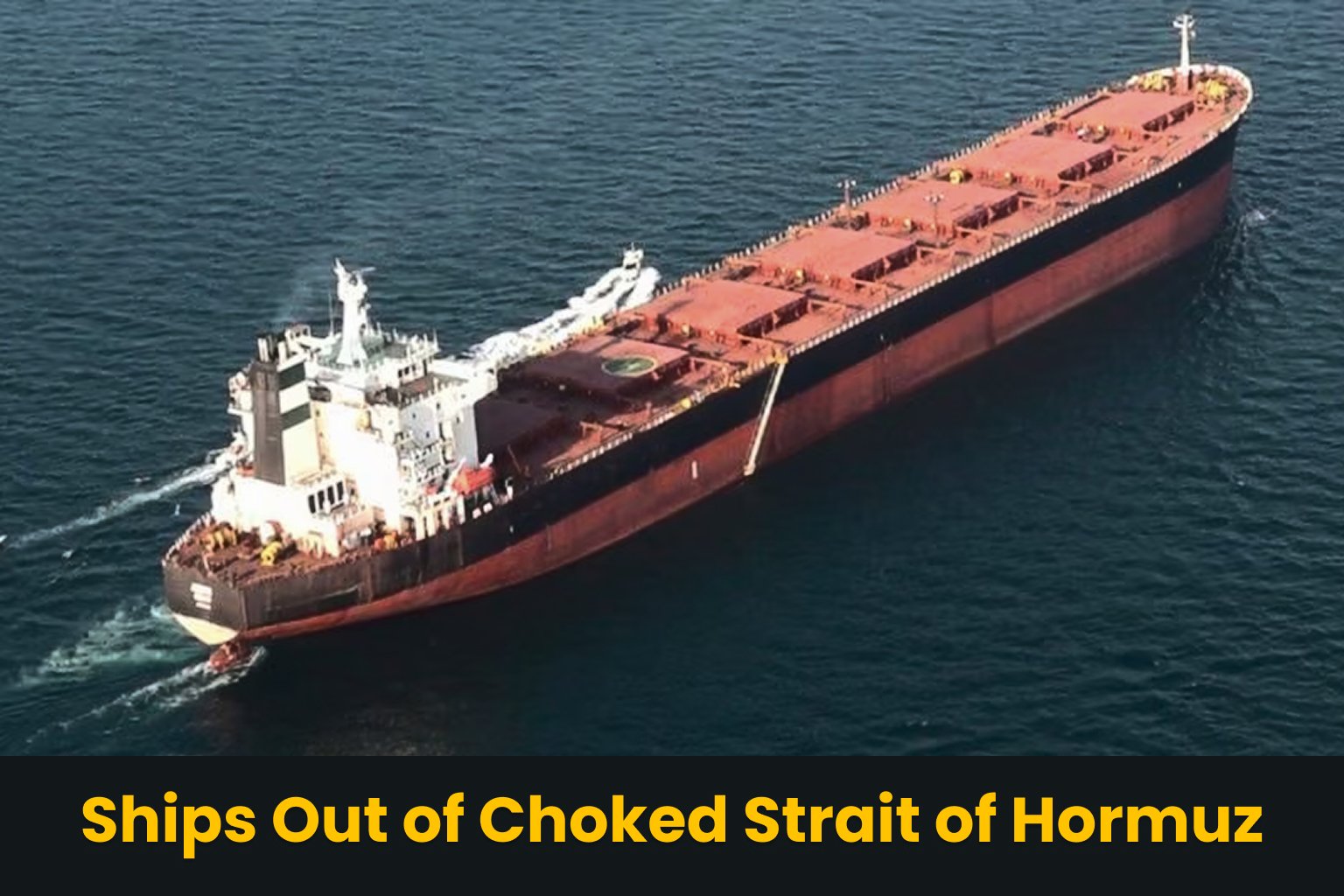
The Indian government is closely watching a tense situation at sea. Right now, authorities are looking at different ways to safely bring Indian merchant ships out of the Strait of Hormuz. This area has become very risky due to growing conflicts between the US-Israel alliance and Iran. Because of this conflict, regular shipping traffic through this highly critical oil route has stopped.
A senior maritime official shared an update on Monday regarding the current situation. There are 36 ships flying the Indian flag in the strait and the surrounding waters right now. The good news is that all of these vessels are completely safe. The crews are secure, and every ship has enough food, water, and essential supplies on board to last through this waiting period.
However, the major problem is movement. None of these 36 ships have been able to pass through the region. They are stuck waiting for the situation to clear up. PC Meena, the deputy director general of shipping for crew matters, confirmed this information. He currently leads the government’s core response team, which is keeping a close eye on the daily developments in the region.
Meena stated that top officials are holding high-level discussions right now. They are looking at every possible option to help the stranded ships leave the danger zone without any harm. One of the main ideas being considered is providing a safe escort. The government might send official assets to guide the Indian-flagged vessels out of the troubled waters safely. However, authorities have not made a final decision on this plan just yet.
The Root Cause of the Disruption
The main reason for this massive traffic halt is a series of threats from Iranian forces. They have warned that they might attack oil tankers passing through the Strait of Hormuz. This narrow body of water is incredibly important for global trade. Nearly one-quarter of all the crude oil transported by sea around the world goes through this exact route. The threats have deeply disturbed the normal flow of maritime traffic.
To manage the crisis, the shipping ministry has given clear orders to the core response team. This group must submit a fresh report on the situation every three hours. These detailed reports must include any new developments seen in the area. They must also update the exact location and physical condition of the affected sailors.
A second government official also shared positive news regarding the safety of the Indian crews. So far, there are no confirmed reports of any injuries, casualties, or detentions involving Indian ships. No unauthorized people have boarded any Indian-flagged vessel. The main focus of the government remains strictly on monitoring the area, verifying information, and keeping the seafarers entirely safe.
Strict Safety Rules and Daily Reporting
Because of the high risks, all Indian ships in the region must follow strict new safety rules. The directorate general of shipping released a notification stating that these rules apply not only in the Strait of Hormuz. The ships must also follow them in the Gulf of Oman, the Persian Gulf, and all nearby sea areas.
These new protocols started around midnight between February 28 and March 1. Under these rules, every Indian-flagged vessel must perform specific security drills between the ship and the shore. These drills follow the guidelines set by the International Maritime Organisation. For example, the ship’s crew must maintain live, ongoing communication with the closest port terminals. They also have to practice mock emergency drills. These practice runs prepare the crew for extreme threats like piracy, unauthorized boarding, and bomb scares.
Along with physical drills, the captains of all Indian ships in these waters have a strict daily task. Every single day, they must fill out online ship reporting forms. They send these forms to the Information Fusion Centre for the Indian Ocean Region. This daily reporting is a mandatory part of the newest safety protocols.
According to a notification first issued in 2024 during the Houthi attacks in the Red Sea and brought back into action on March 2, this daily measure is extremely important. It helps the centre keep a complete, real-time database of all vessels. If an emergency happens and the Indian Navy needs to step in, having exact locations will make tracking and rescue coordination much easier.
Finally, the crisis group gave clear instructions to shipping companies on March 2 about what to do in a worst-case scenario. If any Indian merchant ship faces an actual attack, the crew knows exactly who to call. They must immediately contact the closest Indian Navy ship or a friendly coalition warship. To do this, they are instructed to use VHF Channel 16, which is the standard radio frequency for international marine distress calls.
Conclusion
The situation in the Strait of Hormuz remains highly tense, but the Indian government is taking every necessary step to protect its seafarers. With 36 ships currently stuck but entirely safe, the focus is heavily on careful monitoring and strict emergency planning. The daily reporting rules, mandatory security drills, and direct communication lines with the Indian Navy ensure that the crews are well-prepared for any situation. While top officials continue to discuss safe escort options, the ongoing safety protocols offer a strong layer of protection. The immediate priority remains clear: to ensure zero casualties and safely guide every Indian-flagged vessel out of the restricted zone as soon as the conditions allow.