
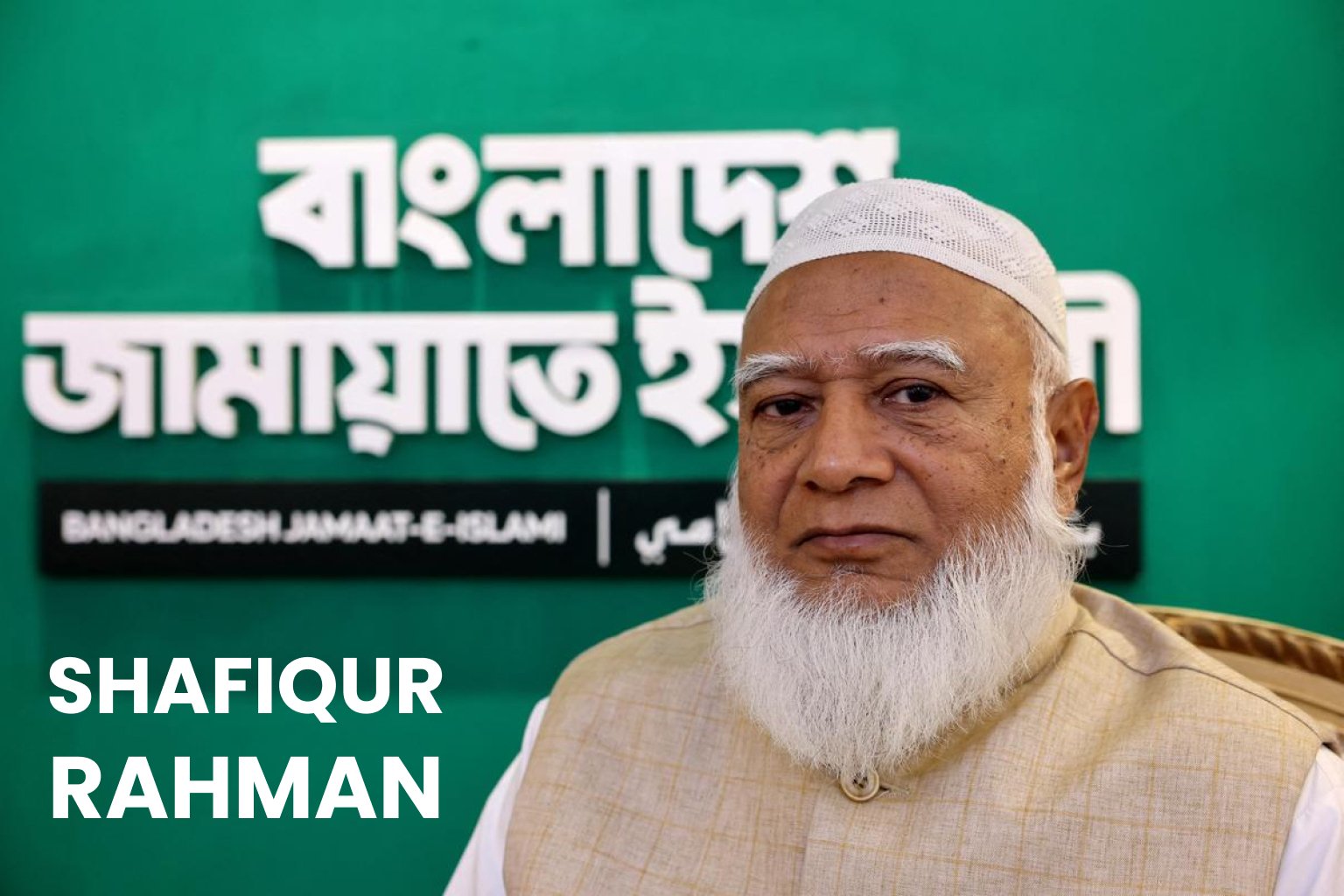
Until very recently, the elite circles of Bangladesh and foreign diplomats kept a safe distance from Shafiqur Rahman and his party. Today, the situation has completely flipped. With opinion polls showing his party running neck-and-neck for the top spot, these same people are now queuing up to meet him.
A Bold Economic Vision
On a recent Wednesday evening in Dhaka, Shafiqur Rahman, the chief (emir) of the Bangladesh Jamaat-e-Islami, revealed an ambitious plan for the country. He announced a key promise ahead of the February 12 election: if his party wins, they aim to quadruple Bangladesh’s Gross Domestic Product (GDP) to $2 trillion by 2040.
Speaking to a room full of politicians and diplomats, the 67-year-old Rahman promised massive investments. His plan includes boosting technology-driven agriculture, manufacturing, IT, education, and healthcare. He also pledged to increase public spending and attract more foreign investment.
Economists in Dhaka are skeptical. They doubt the money exists to fund such sweeping promises, calling the manifesto heavy on slogans but light on details. However, analysts believe the numbers matter less than the message. For Jamaat, this manifesto is a signal. It presents a party that was long excluded from power as a credible, modern alternative that can lead Bangladesh into the future.
From Untouchable to VIP
The audience at the event told its own story. For years, business elites and diplomats avoided Jamaat openly. Now, European, Western, and even Indian diplomats are seeking meetings with Rahman. This is a man who, until recently, was seen internationally as politically untouchable.
Rahman’s party has been banned twice in the past, including by the administration of ousted Prime Minister Sheikh Hasina. Yet, the upcoming election has raised a question that seemed impossible a year ago: Could Shafiqur Rahman actually become the next Prime Minister of Bangladesh?
Filling the Political Vacuum
This dramatic shift is partly due to a sudden void in Bangladeshi politics. The uprising in July 2024 did not just end Sheikh Hasina’s long rule; it broke the country’s traditional political order. For decades, politics was a two-horse race between Hasina’s Awami League and the Bangladesh Nationalist Party (BNP).
With the Awami League effectively out of the picture and the BNP remaining as the only other major force, a vacuum emerged. Many thought student leaders would fill this space. Instead, Jamaat-e-Islami moved in from the margins. As the election approaches, Jamaat has become one of the two most dominant forces, with some polls placing it in direct competition with the BNP.
The Doctor Who Became “Grandfather”
At the center of this resurgence is Rahman himself. A former government doctor, he is soft-spoken and projects a calm image. He took over the party in 2019 when it was banned. In December 2022, he was arrested in the middle of the night on charges of supporting militancy. He spent 15 months in jail before securing bail.
After the student-led protests toppled Hasina, Rahman’s name was cleared from the case. Since then, his public appearances have drawn huge attention. In July, he collapsed twice from heat exhaustion during a rally but returned to the stage to finish his speech.
“As long as Allah grants me life, I will fight for the people,” he told the crowd. “If Jamaat is elected, we will be servants, not owners.”
This dedication has earned him a new nickname among Gen Z supporters: “Dadu,” or grandfather. Young voters describe him as respectful and attentive, unlike other politicians who they feel belittle them.
Rebranding the Party
Rahman is working hard to change how Jamaat is viewed. He wants to move the party away from being defined solely by religious history and towards a reputation for clean governance and discipline.
To prove this inclusivity, the party has nominated a Hindu candidate for the first time in its history. Krishna Nandi, a candidate from Khulna, says the party helps people in poverty regardless of their religion.
However, challenges remain. The party still faces questions about its role in the 1971 war of independence. Rahman has acknowledged “past mistakes” and asked for forgiveness, but he has avoided specific admissions.
Furthermore, his recent comments on women in leadership have sparked controversy. In an interview, he stated that a woman cannot hold the top position in the party due to “physical limitations,” such as pregnancy and breastfeeding. Critics argue this view contradicts the party’s attempt to look modern, especially since women played a huge role in the 2024 uprising.
International Recognition
Despite these controversies, the world is paying attention. Jamaat officials recently met with Indian diplomats, and party figures were invited to the Indian High Commission for Republic Day—an unprecedented move. Reports suggest US diplomats are also interested in building bridges with the party’s student wing.
Conclusion
As the election draws near, Shafiqur Rahman stands as a central figure in Bangladesh’s new political landscape. Whether he becomes Prime Minister or leads the opposition, his grip on his party and his influence on the country are now undeniable. He has successfully transformed from a jailed outcast into a leader that the world can no longer ignore.