
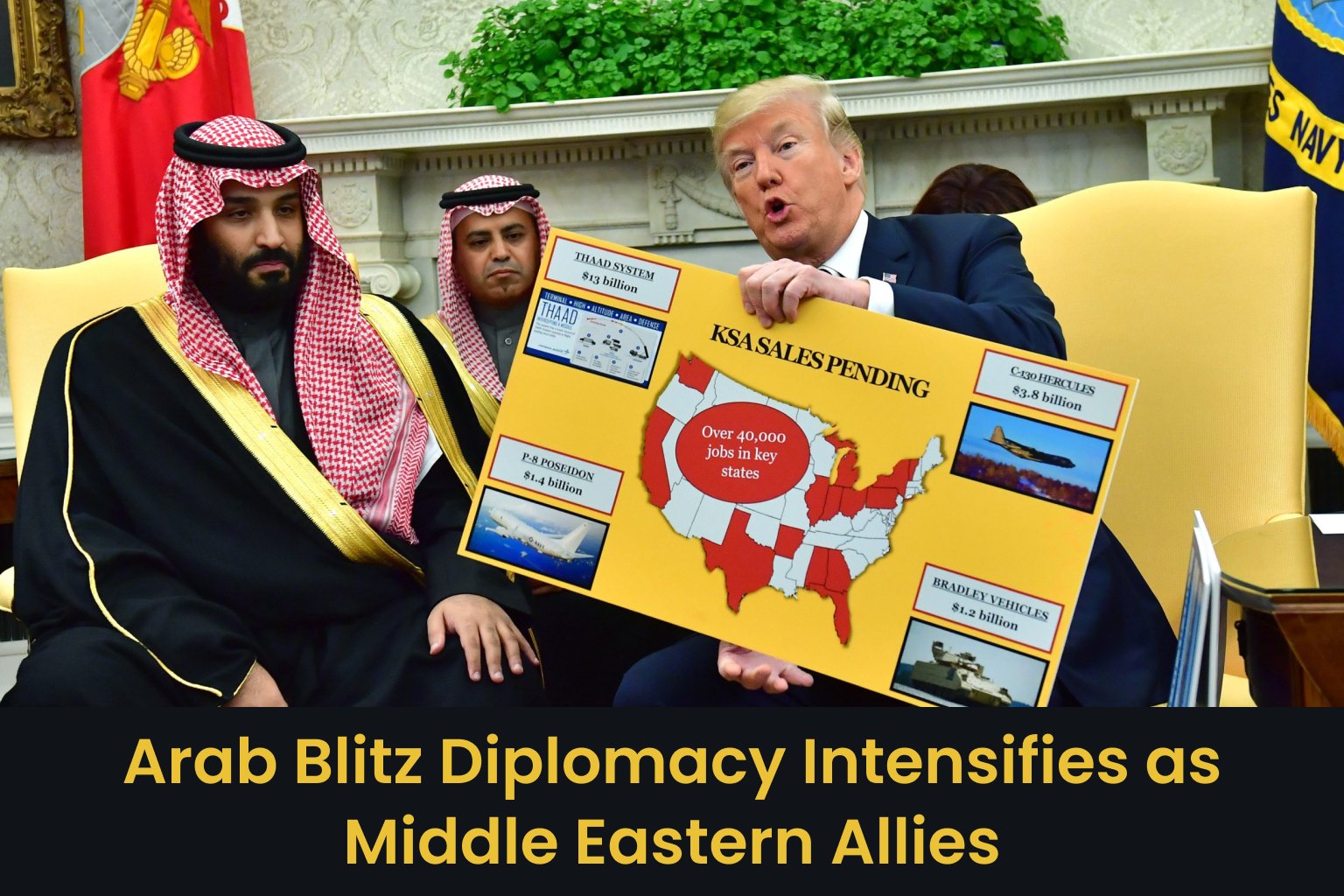
Rising US-Iran Military Tension Prompts Regional Diplomatic Intervention
Middle Eastern allies have launched an urgent Arab blitz diplomacy campaign, pressuring the Trump administration to reconsider military strikes against Iran amid escalating US-Iran military tension over Tehran’s violent suppression of protesters.
Regional Powers Unite in Diplomatic Push Against Military Action
Senior officials from Egypt, Oman, Saudi Arabia, and Qatar have intensified their diplomatic efforts over the past 48 hours, expressing serious concerns about potential American military intervention in Iran. An Arab diplomat, speaking anonymously about these sensitive discussions, revealed that regional leaders fear such action would destabilize the already volatile Middle East and trigger severe global economic consequences.
The Arab blitz diplomacy efforts come as markets reflect growing uncertainty about military escalation. Oil prices dropped Thursday following President Trump’s apparent shift in rhetoric, with traders interpreting his changing tone as a signal that he may step back from attacking Iran after days of issuing harsh threats over the regime’s brutal crackdown.
White House Maintains All Options Open Amid Diplomatic Pressure
Despite the intensive diplomatic intervention, White House press secretary Karoline Leavitt confirmed Thursday that “all options remain on the table” as Trump addresses the Iranian crisis.
“The truth is only President Trump knows what he’s going to do and a very, very small team of advisers are read into his thinking on that,” Leavitt stated. She emphasized that Trump “continues to closely monitor the situation on the ground in Iran.”
Iran’s Violent Crackdown Intensifies as Protests Face Brutal Suppression
The nationwide demonstrations challenging Iran’s theocratic government appeared increasingly suppressed Thursday, one week after authorities severed the country’s internet connections and escalated their deadly crackdown. Human rights activists report that at least 2,637 people have died in the violent suppression.
Trump’s Shifting Rhetoric Reflects Complex Diplomatic Calculations
The current US-Iran military tension has been marked by dramatic shifts in Trump’s public statements. Within 24 hours, the President moved from promising Iranian citizens that “help is on its way” and encouraging them to seize control of government institutions to suddenly declaring Wednesday that he had received intelligence from “very important sources on the other side” indicating Iran had ceased killing protesters and halted planned executions.
Regional Allies Issue Dual Warnings in Diplomatic Offensive
The Arab blitz diplomacy campaign includes warnings directed at both Washington and Tehran. Arab officials have urged senior Iranian leaders to immediately end their violent repression of demonstrators. They have also cautioned that any Iranian retaliation against American or regional targets following potential U.S. military action would result in severe consequences for Iran.
Military Options Remain Active Despite Diplomatic Efforts
When questioned about reports of allies requesting Trump to postpone strikes during a White House briefing, Leavitt avoided directly addressing the matter.
Ambassador Mike Waltz, the U.S. envoy to the United Nations, confirmed that military action remains under consideration. “President Trump is a man of action, not endless talk like we see at the United Nations,” Waltz declared during a U.N. Security Council meeting focused on the Iran protests. “He has made it clear all options are on the table to stop the slaughter.”
Signs Point to Possible De-escalation of US-Iran Military Tension
Trump himself has begun sending signals suggesting he may be reconsidering immediate military strikes against Iran. He used social media to highlight a Fox News report about the suspension of a death sentence for Erfan Soltani, a 26-year-old Iranian shopkeeper.
Iranian state media disputed that Soltani faced execution. Judicial authorities confirmed that Soltani remains detained in a facility outside Tehran, facing charges of “propaganda activities against the regime” alongside other protesters.
“This is good news. Hopefully, it will continue!” Trump posted regarding the reported execution postponement. The White House later claimed Iran had suspended 800 scheduled executions.
Strategic Ambiguity Characterizes Trump’s Approach
Trump has consistently employed deliberate ambiguity regarding his military intentions to maintain tactical surprise. Last June, while considering whether to support Israeli strikes on Iran, Leavitt delivered a presidential message stating Trump would decide on Iranian strikes “within the next two weeks.” Less than 48 hours later, Trump authorized B-2 bomber attacks on critical Iranian nuclear facilities.
Military Readiness Concerns May Influence Timing Decisions
Jeremy Shapiro, research director of the European Council on Foreign Relations, suggests Trump may be delaying strikes due to current U.S. military positioning in the Middle East. No American aircraft carriers—considered essential for major military operations—are currently stationed in the region. The USS Gerald R. Ford and its strike group have been redeployed to the U.S. Southern Command for counter-narcotics operations targeting Venezuela.
“It might be that they’re delaying things and using the time for getting that posture correct,” Shapiro explained.
New Sanctions Target Iranian Officials Despite Diplomatic Efforts
Alongside the ongoing Arab blitz diplomacy and US-Iran military tension, the Trump administration announced fresh sanctions against Iran Thursday. The measures target the secretary of the Supreme Council for National Security, whom the Treasury Department identifies as among the first officials to advocate violence against Iranian protesters.
The Treasury Department’s Office of Foreign Assets Control also designated 18 individuals and companies accused of laundering money from Iranian oil sales to international markets. These entities allegedly operate as part of a shadow banking network connected to sanctioned Iranian financial institutions Bank Melli and Shahr Bank.
Regional Stability Hangs in Balance as Diplomatic Efforts Continue
As Arab blitz diplomacy intensifies and US-Iran military tension continues escalating, Middle Eastern allies remain committed to preventing military action that could further destabilize the region. The success of these diplomatic interventions may determine whether the current crisis leads to military confrontation or a negotiated de-escalation.