
The Most Destructive Political Feud in Brussels Continues to Undermine European Unity
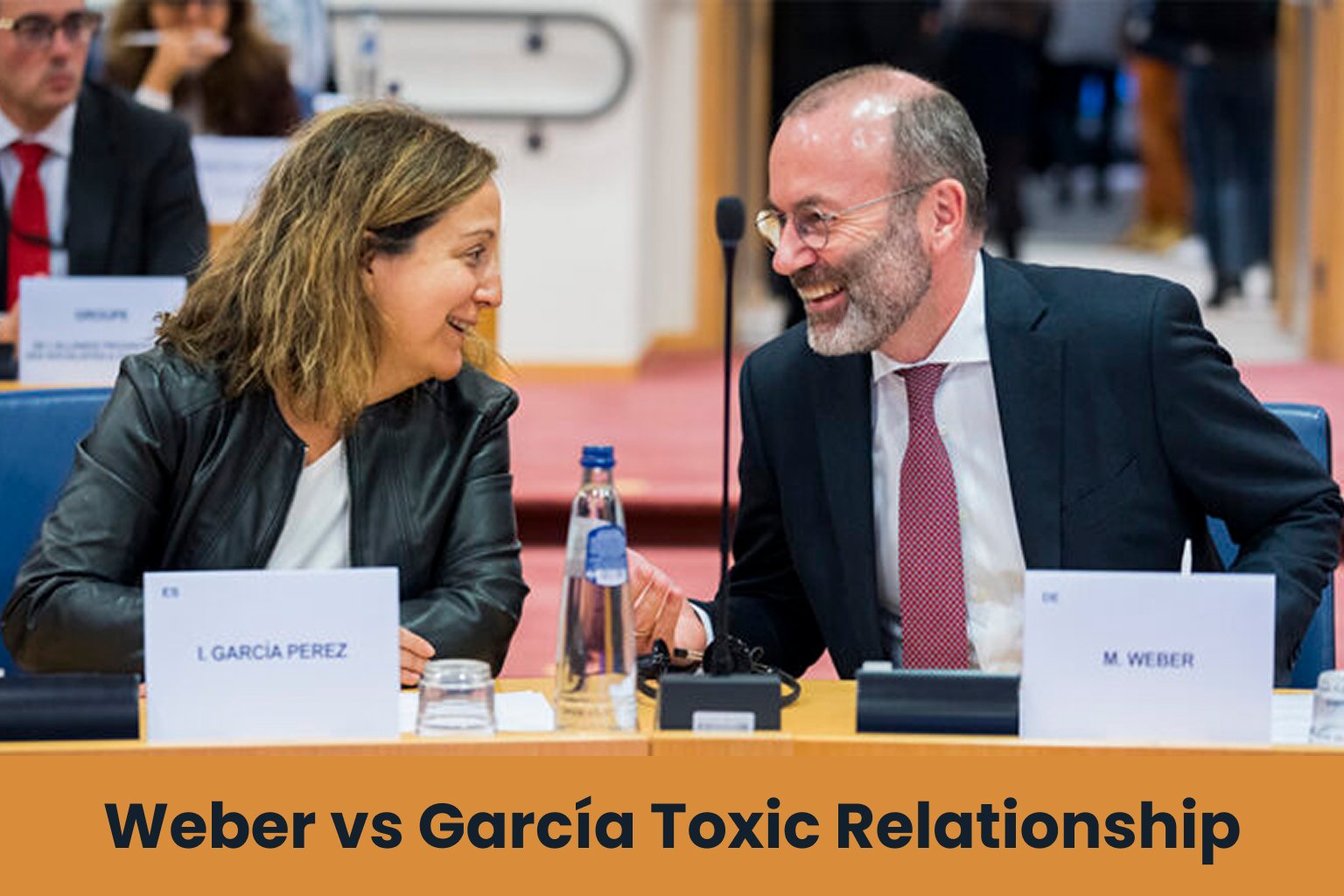
The Weber vs García toxic relationship has become the defining crisis creating EU Parliament political instability that threatens to derail European Commission President Ursula von der Leyen’s second-term objectives. This six-year-long bitter feud between two of Europe’s most powerful political leaders continues to poison the heart of European democracy.
The Power Players Behind Europe’s Political Crisis
Manfred Weber, the influential German leader of the center-right European People’s Party (EPP), and Iratxe García, the Spanish head of the center-left Socialists and Democrats (S&D), control Europe’s largest political families. Their deteriorating relationship now threatens the traditional stability that has governed EU Parliament operations for decades.
The Genesis of a Political Betrayal That Changed Everything
The 2019 Commission President Ambush
The Weber vs García toxic relationship originated from a devastating political betrayal in 2019. García, accompanied by Romanian liberal leader Dacian Cioloș, delivered crushing news to Weber: they would not support his bid for European Commission President, despite Parliament’s tradition of backing the largest party’s candidate.
This strategic political assassination killed Weber’s Commission ambitions and created the foundation for ongoing EU Parliament political instability. The German politician has never forgiven what he perceives as García’s ultimate betrayal.
Personal Animosity Transforms Into Political Warfare
According to Manon Aubry, co-chair of The Left group, the pair resembles “two toxic exes who had a good relationship, but Weber cheated on García with the far right, making it extremely difficult for the Socialists.”
How Political Toxicity Creates Legislative Chaos
Breaking Traditional Alliances
The Weber vs García toxic relationship has shattered decades of cooperation between the EPP and S&D groups. These political families previously provided stable majorities in Parliament, ensuring predictable voting patterns and legislative success.
Today’s reality reveals dangerous unpredictability:
- November’s simplification bill on green reporting saw the EPP abandon centrist allies
- Weber increasingly partners with far-right groups to pass legislation
- García responds with hardened attacks against von der Leyen’s policies
Commission Officials Express Growing Concern
Senior Commission officials acknowledge that “Weber and García have become a problem for von der Leyen.” Their disagreements create legislative uncertainty, making it impossible for the Commission President to guarantee parliamentary support for her agenda.
Public Denials Mask Private Political Warfare
Diplomatic Language Conceals Deep Hostility
Despite public claims of professional cooperation, both leaders maintain their working relationship remains functional. Weber describes their connection as being in a “great state,” while García characterizes it as “much more normalized than you might think.”
However, MEPs and parliamentary staff reveal the truth: six years of collaboration have systematically destroyed trust between these crucial European leaders.
Personal Attacks Escalate Parliamentary Tensions
The September 2025 State of the Union Breakdown
Von der Leyen’s attempts to bridge the widening gap between EPP and Socialist groups collapsed spectacularly during heated parliamentary exchanges. Weber accused García and the Socialists of “harming the European agenda,” while García delivered a devastating response: “You know who is responsible for the fact that this pro-European alliance does not work in this Parliament? It has a name and surname. It is called Manfred Weber.”
Strategic Political Positioning Drives Aggressive Rhetoric
The EU Parliament political instability forces García to adopt increasingly aggressive tactics. Former centrist lawmakers note that “the only way for Iratxe to survive is to be more aggressive with EPP and with Manfred” as concrete political victories become increasingly rare.
The Spanish Connection: National Politics Poison European Relations
Pedro Sánchez’s Impact on Brussels Dynamics
Spanish Prime Minister Pedro Sánchez’s 2023 reelection further intensified the Weber vs García toxic relationship. Weber has consistently supported Spain’s center-right opposition, giving them unlimited freedom to attack Spanish Socialists in Parliament proceedings.
This dynamic creates systematic conflict whenever Spanish issues appear on parliamentary agendas, with observers noting that “every time Spain is on the agenda, it becomes a nightmare, everyone screaming.”
The Teresa Ribera Commissioner Confirmation Crisis
The 2024 commissioner hearings revealed the depths of their animosity. Weber and the EPP launched aggressive attacks against Teresa Ribera, Sánchez’s deputy, blaming her for deadly Valencia floods. This partisan assault demonstrated how national politics now poison European legislative processes.
Far-Right Alliances Destroy Centrist Cooperation
Weber’s Strategic Shift Toward Extremist Groups
Weber’s decision to collaborate with far-right parties represents a fundamental departure from traditional European centrist politics. He justifies this controversial strategy by arguing that addressing migration and overregulation issues legitimizes partnering with extremist groups.
This political calculation systematically excludes Socialists from legislative processes, forcing García’s group to the margins of European decision-making.
Parliamentary Operations Suffer Under Leadership Crisis
The End of Pre-Negotiated Agreements
The breakdown of the Weber-García partnership has eliminated Parliament’s traditional “pre-cooking” of important decisions. Aubry explains that leadership meetings previously featured predetermined outcomes, but “now we walk in and don’t know where we’ll end up.”
This unpredictability transforms parliamentary operations from efficient legislative processes into chaotic political battles.
Future Battles Threaten Further Destabilization
The 2027 Leadership Reshuffle Approaches
The next parliamentary leadership elections in 2027 already generate conflict between Weber and García. The EPP seeks a third term for current President Roberta Metsola, while Socialists claim their turn according to alleged power-sharing agreements.
This dispute threatens García’s position as S&D leader, with Italian and German delegations positioning themselves for leadership challenges if the presidency remains unavailable.
The Broader Impact on European Democracy
Von der Leyen’s Diminished Authority
The Weber vs García toxic relationship systematically undermines von der Leyen’s ability to govern effectively. Without reliable parliamentary majorities, her second-term agenda faces constant uncertainty and potential defeat.
Erosion of Pro-European Coalition
The collapse of traditional EPP-S&D cooperation empowers euroskeptic and far-right groups. Their growing influence reflects the dangerous consequences of leadership failures at the heart of European democracy.
Conclusion: A Relationship Beyond Repair
The Weber vs García toxic relationship continues generating EU Parliament political instability that threatens European integration itself. Despite half-hearted suggestions of informal reconciliation over drinks, both leaders remain too busy—and too bitter—to repair their destructive feud.
As Weber nervously laughs about potential social meetings and García retreats into domestic isolation, Europe pays the price for their personal and political failures. The continent’s democratic institutions suffer while two powerful individuals prioritize their grievances over European citizens’ interests.
The question remains whether European democracy can survive this toxic relationship or whether new leadership will emerge to restore stability to the EU Parliament’s crucial operations.