
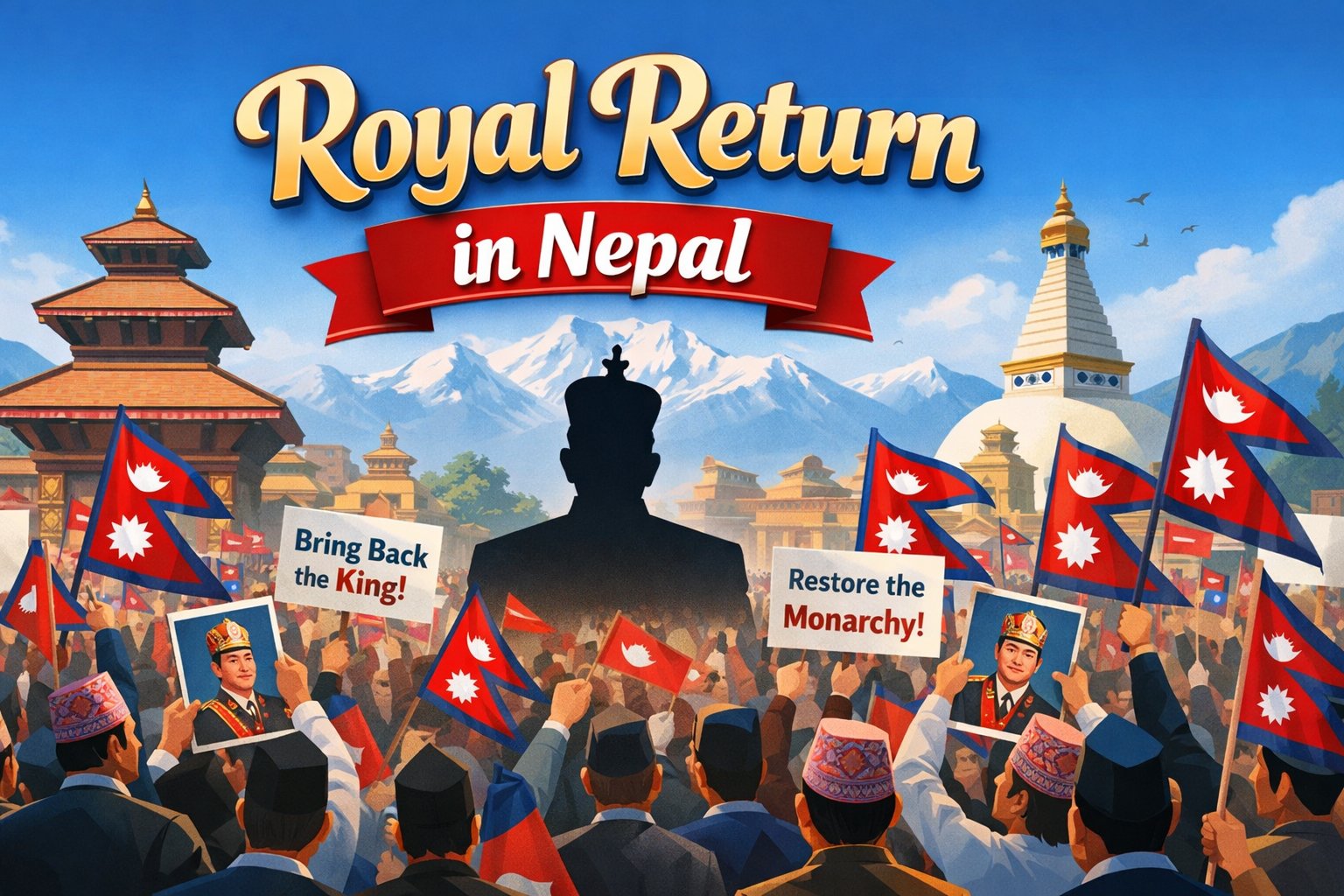
Royalist Supporters Unite in Kathmandu Calling for Constitutional Monarchy
The streets of Kathmandu witnessed a significant Nepal Monarchy Restoration Rally on Sunday as thousands of supporters gathered to demand the return of the deposed royal family ahead of the crucial Nepal March Elections 2026. This demonstration marks the most substantial pro-monarchy gathering since the September youth uprising that reshaped the country’s political landscape.
Historic Rally Calls for Royal Restoration
Demonstrators assembled around the iconic statue of King Prithvi Narayan Shah, the founding father of the Shah dynasty from the 18th century. Participants passionately chanted “We love our king. Bring back the king,” expressing their unwavering support for the restoration of constitutional monarchy in Nepal.
The Nepal Monarchy Restoration Rally represents the first major royalist demonstration since violent youth protests in September led to the establishment of an interim government, which subsequently announced fresh parliamentary elections scheduled for March 2026.
Protesters Express Strong Support for Monarchical System
Rally participant Samrat Thapa articulated the sentiments of many attendees, declaring, “The last and only alternative for this country is king and monarchy only. In the present context and the path the country has taken after the Gen Z movement, there needs to be monarchy restored to manage the situation.”
The demonstration took place on the birth anniversary of King Prithvi Narayan Shah, a date that historically carries deep significance for royalist supporters across Nepal. Unlike previous years when such gatherings resulted in violent confrontations between protesters and law enforcement, Sunday’s event remained peaceful under the watchful eyes of riot police.
Historical Context of Nepal’s Monarchical Abolition
Nepal’s journey from monarchy to republic began in 2008 when the last Shah king, Gyanendra, faced forced abdication following widespread political pressure. The monarchy’s abolition transformed Nepal into a federal democratic republic, ending centuries of royal rule that had defined the nation’s political structure.
However, tragic incidents have marked previous pro-monarchy demonstrations. The Nepal Monarchy Restoration Rally in March of the previous year resulted in two fatalities during clashes with security forces, highlighting the deep political divisions surrounding the monarchy’s potential return.
Current Political Landscape and Interim Government
Nepal currently operates under an interim government led by Prime Minister Sushila Karki, who holds the distinction of being the country’s first female prime minister. Karki, a retired Supreme Court judge, assumed leadership following intense protests by Generation Z activists who voiced concerns about widespread corruption, limited opportunities, unemployment, and poor governance practices.
The youth movement that brought about this political transition began with opposition to the previous government’s controversial but short-lived social media ban, which served as a catalyst for broader demonstrations against systemic issues plaguing the nation.
Challenges Facing the Interim Administration
Critics have targeted Prime Minister Karki for her perceived reluctance to pursue corruption cases aggressively. This criticism adds pressure to the interim government as it prepares for the upcoming Nepal March Elections 2026, which will determine the country’s future political direction.
Sustained Royal Family Support Base
Despite the monarchy’s abolition over a decade ago, Nepal’s royal family continues to maintain considerable support among certain segments of the population. The Nepal Monarchy Restoration Rally demonstrates that royalist sentiment remains a significant political force that could influence the outcome of the Nepal March Elections 2026.
Looking Ahead to March 2026 Elections
As Nepal approaches the Nepal March Elections 2026, the monarchy restoration debate adds another layer of complexity to the country’s political discourse. The peaceful nature of Sunday’s rally suggests that royalist groups seek to engage in democratic processes rather than pursue confrontational tactics.
The upcoming elections will serve as a crucial test for all political factions, including monarchy supporters, to present their vision for Nepal’s future through legitimate democratic channels. Whether the Nepal Monarchy Restoration Rally movement can translate street support into electoral success remains to be seen as the country prepares for this pivotal moment in its democratic journey.
The intersection of traditional monarchist values with modern democratic aspirations continues to shape Nepal’s political narrative, making the Nepal March Elections 2026 one of the most significant electoral events in the nation’s recent history.