
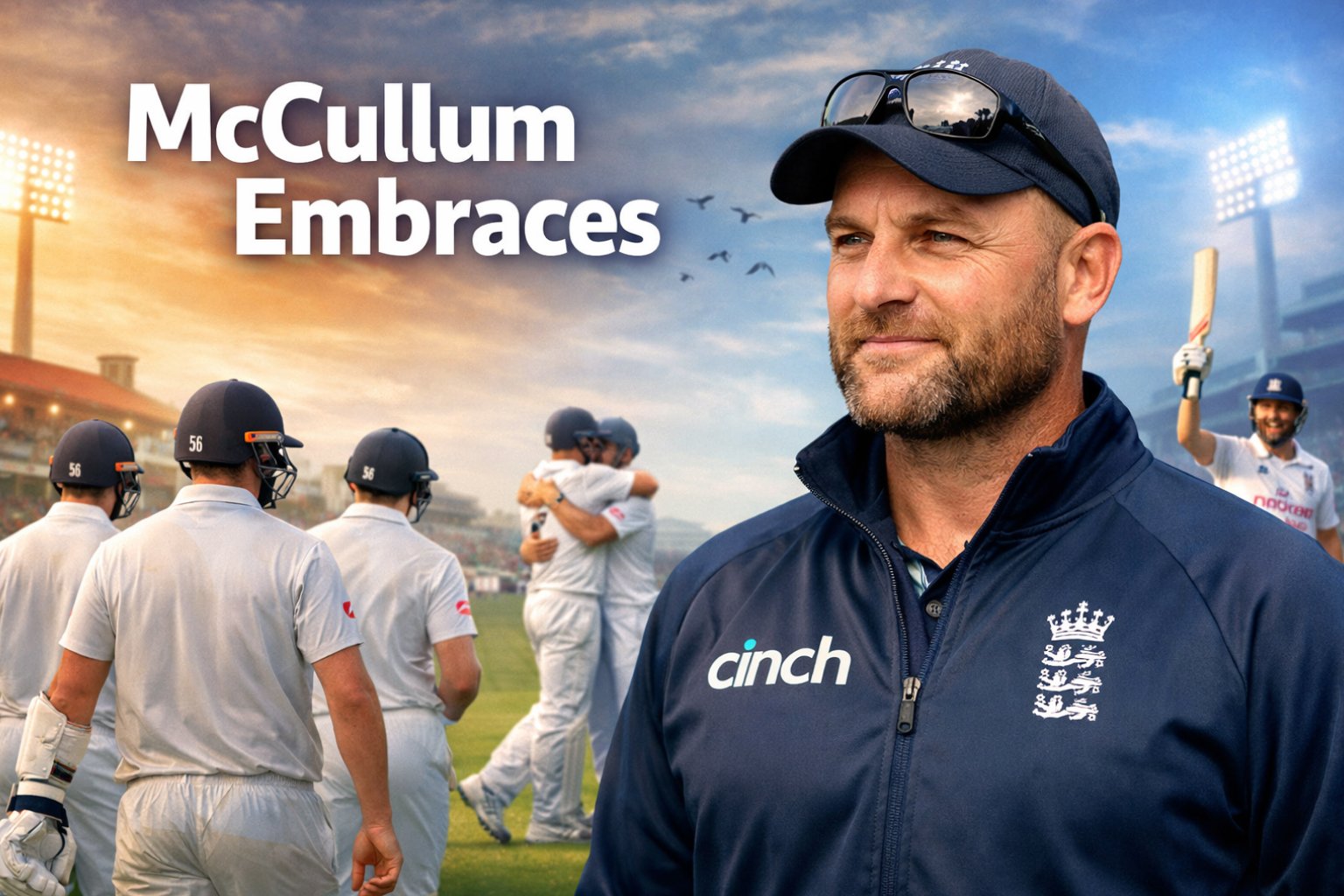
England Head Coach Open to Change Despite Ashes Setback
Brendon McCullum has acknowledged that England cricket might benefit from “someone better” if he cannot effectively steer the national team forward. The England head coach remains committed to his role while expressing openness to evolution in his coaching methods following the disappointing 4-1 Ashes series defeat in Australia.
ECB Backs McCullum and Key Despite Ashes Disappointment
McCullum and director of cricket Rob Key will retain their positions as England seeks to recover from their Australian tour setback. England and Wales Cricket Board (ECB) chief executive Richard Gould continues conducting a comprehensive review of the Ashes campaign and plans to implement necessary improvements in the coming months.
The 44-year-old New Zealand native has engaged in discussions with Gould and ECB chairman Richard Thompson. McCullum will lead England’s white-ball series in Sri Lanka within the next fortnight, followed by the T20 World Cup campaign.
Coach’s Vision for Progress and Evolution
McCullum expresses enthusiasm about continuing his coaching tenure, though his commitment depends on the nature of changes required by the ECB hierarchy.
“I maintain firm conviction in many of my coaching methods,” McCullum stated. “I fully support evolution and embrace progress across all sports, not exclusively cricket. This philosophy extends to every aspect of life.”
The coach emphasized his willingness to adapt while maintaining core principles: “You must stand for something meaningful. You must believe in your methods and trust your approach to achieving success.”
The Transformation of England’s Test Team
Key, McCullum, and captain Ben Stokes revitalized England’s Test cricket four years ago after inheriting a team devastated by a 4-0 Australian defeat. Their innovative approach initially delivered remarkable results, securing 10 victories from their first 11 matches.
However, the strategies that previously brought success have faced intense scrutiny during the recent Australian tour. England struggled significantly with batting, bowling, and fielding performances. Critics have questioned the team’s preparation methods, particularly the absence of a dedicated bowling coach and specialist fielding staff.
Leadership Philosophy and Authority
Australian defeats traditionally trigger major leadership changes within English cricket, but the ECB hierarchy aims to avoid such drastic measures this time. McCullum’s future appears linked to his willingness to accept necessary changes and his capability to implement them effectively.
“Authenticity remains crucial in everything you pursue,” McCullum explained. “As head coach, you need substantial influence over environmental operations and control over critical decisions during high-pressure situations.”
He continued: “While I remain open to progress and evolution, including necessary adjustments, I must retain the ability to steer the ship. Without this authority, perhaps someone else could perform better.”
Addressing Team Culture Concerns
McCullum’s leadership environment faces criticism regarding alleged drinking culture within the England setup. Players were photographed in bars during their Noosa holiday between the second and third Tests.
Following England’s final Ashes Test defeat in Sydney, reports emerged about Harry Brook’s altercation with a nightclub bouncer before a Wellington one-day international during the New Zealand tour preceding the Australian trip.
Brook, who captains the white-ball team, received approximately £30,000 in fines and a final conduct warning. The 26-year-old offered unreserved apologies for his behavior.
McCullum Defends Team Conduct
Addressing the drinking allegations while aware of Brook’s incident, McCullum defended his players: “Half our squad abstains from alcohol completely. Others enjoy occasional beers, which represents normal behavior across most professions.”
England proceeded with the Noosa trip despite the New Zealand incident. Brook, serving as Test vice-captain, appeared in photographs drinking at the Queensland resort.
“I considered Noosa essential for team morale,” McCullum justified. “The players enjoyed themselves appropriately without excess, while maintaining their training commitments away from public view.”
Stokes Supports McCullum’s Continuity
Captain Ben Stokes expects McCullum to lead England’s first home summer Test against New Zealand in June. The all-rounder publicly supports McCullum and pledges to share this view with ECB management when consulted.
McCullum confirmed that he and Stokes maintain shared vision for England’s future direction.
Building Strong Leadership Relationships
“We engage in robust discussions regularly,” McCullum revealed. “We invest in relationships both as friends and professional colleagues. We don’t always agree on every decision, but we commit to supporting each other. This mutual support defines effective leadership.”
The coach’s emphasis on collaborative leadership while maintaining his authority to steer the team demonstrates his balanced approach to managing England cricket’s evolution. As the ECB completes its review process, McCullum’s adaptability and leadership philosophy will determine England cricket’s future trajectory.
Looking Ahead: England’s Path Forward
England’s cricket future depends on successfully balancing McCullum’s proven leadership abilities with necessary tactical and structural improvements. The upcoming Sri Lanka series and T20 World Cup will provide immediate opportunities to demonstrate positive evolution under McCullum’s continued guidance.
The coach’s commitment to maintaining authenticity while embracing change positions England cricket for potential recovery from their Australian disappointment. His ability to steer the team through this challenging period will ultimately determine both his tenure and England’s competitive prospects.