
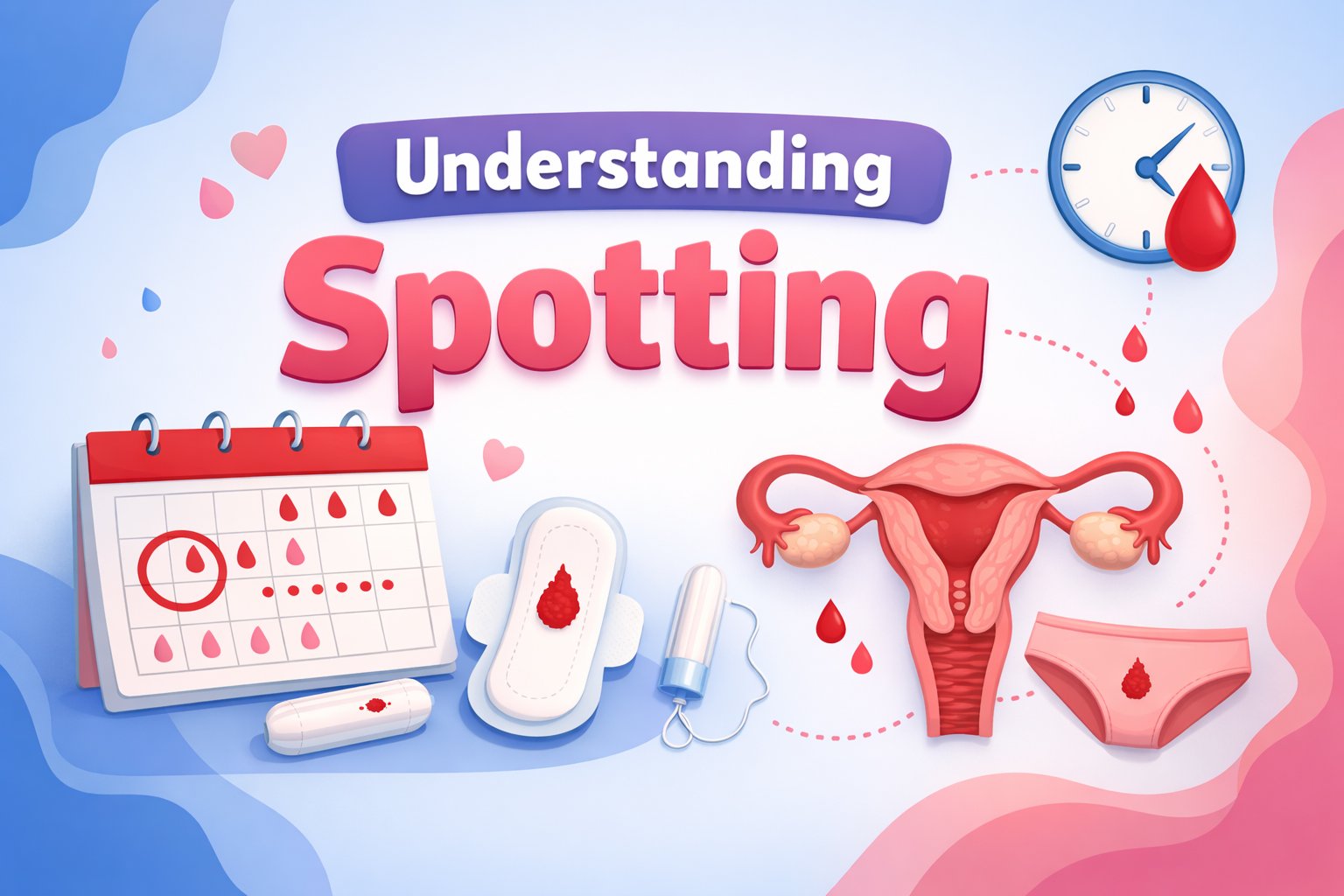
Recognizing your period is usually straightforward. The distinct flow, mood changes, and uterine cramps clearly signal that your menstrual cycle has begun. However, spotting creates confusion and uncertainty for many women.
Discovering small red spots in your underwear can indicate various conditions: pregnancy, ovulation, stress, or an approaching period. Even women who understand their menstrual cycles well can feel anxious when facing period time issues involving unexpected bleeding. This comprehensive guide explains spotting patterns before, after, and between periods to help ease your concerns.
Key Differences Between Spotting and Your Period
Normal Period Characteristics
Typical periods occur every 21 to 35 days. Period duration varies significantly among women – some experience 2-day periods while others menstruate for 7 days. Extended bleeding beyond this timeframe may indicate menorrhagia (heavy periods), which suggests potential underlying reproductive health issues.
Your period’s first day marks “day 1” of your monthly cycle, often accompanied by familiar symptoms: headaches, cramps, and food cravings. Despite feeling like substantial blood loss, women typically release only 4 to 7 tablespoons during their entire period. Period blood appears red or brown when the uterus sheds older tissue.
Spotting Characteristics
Spotting differs significantly from regular periods. It occurs at any point during your monthly cycle, producing only light bleeding throughout the day. Spotting blood appears light pink or dark brown rather than the typical red period color.
Unlike periods, spotting rarely causes cramping or discomfort – except in cases of implantation spotting during early pregnancy.
Common Causes of Spotting During Different Cycle Phases
1. Stress-Related Spotting
Modern society’s glorification of busy lifestyles creates widespread stress among women. Whether stemming from demanding careers, family pressures, or societal expectations, elevated cortisol levels significantly impact menstrual cycles.
High stress levels commonly cause missed periods, irregular cycles, and spotting. If your spotting correlates with high-stress periods, you’ve likely identified the cause.
Managing stress-related spotting:
- Practice regular relaxation techniques
- Engage in yoga or meditation
- Learn to decline unnecessary commitments
- Prioritize self-care activities
Effective stress management typically resolves spotting issues and normalizes menstrual cycles.
2. Ovulation Spotting
After your period ends, your brain signals the ovaries to prepare an egg for release. When ovaries release this egg into the fallopian tubes, ovulation begins. This process usually occurs around day 14 but varies based on individual cycle lengths.
The 12 to 24-hour window when your egg awaits fertilization can trigger light bleeding. Only 1 to 2 percent of women experience ovulation spotting, which often appears as pink or light brown spots mixed with clear, egg-white-like discharge – a fertility indicator.
3. Implantation Bleeding (Early Pregnancy)
When sperm fertilizes your egg during ovulation, the fertilized egg travels to your uterus and implants in the uterine lining. This implantation process can cause light bleeding known as implantation spotting.
Implantation bleeding represents one of pregnancy’s earliest signs, though not all women experience it. When it occurs, implantation spotting lasts several hours to a few days and may include mild lower abdominal cramping.
4. Post-Period Spotting
Discovering blood spots after your period seemingly ends frustrates many women. However, post-period spotting ranks among the most common spotting experiences.
This bleeding occurs when your uterus hasn’t completely expelled its unused inner lining. Unless your period restarts shortly after ending, post-period spotting requires no medical concern.
5. Birth Control-Related Changes
Starting new birth control methods commonly triggers spotting as a side effect. Different contraceptive methods affect women’s bodies in various ways:
IUD Users: New IUD insertion often causes several months of spotting. Many IUD users eventually experience lighter periods or complete period cessation.
Oral Contraceptives: Starting, stopping, or missing birth control pills can cause pink or brown spotting due to estrogen level fluctuations. Estrogen maintains your uterine lining, so hormonal changes trigger breakthrough bleeding.
6. Emergency Contraceptive Effects
Taking morning-after pills like Plan B can cause temporary spotting due to the high hormone concentrations (estrogen and progesterone) in emergency contraceptives. This spotting typically resolves quickly and doesn’t indicate pregnancy or period complications.
7. Uterine Fibroids
Uterine fibroids are benign tumors growing in and around uterine walls. While doctors haven’t identified specific fibroid causes, African American women and overweight women face higher risks.
Fibroid symptoms include:
- Irregular spotting
- Fertility challenges
- Painful intercourse
- Lower back pain
- Chronic bloating
Don’t assume fibroids based solely on spotting, as many other causes are more likely.
8. Health-Related Spotting
Minor illnesses like colds or flu rarely cause spotting directly. However, feeling unwell while experiencing unusual bleeding may indicate underlying health issues ranging from sexually transmitted infections to more serious conditions.
Avoid self-diagnosis through internet searches. Consult healthcare providers when you suspect health-related spotting causes.
9. First Period Adjustments
Girls experiencing their first periods (menarche) often face years of irregular bleeding patterns. Early menstrual cycles frequently include unpredictable periods and common spotting episodes as the body adjusts to hormonal changes.
This irregularity makes it challenging to predict safe days for wearing light-colored clothing and represents a normal part of adolescent development.
When Should You Seek Medical Attention?
Most spotting situations don’t require immediate medical intervention. You can typically manage spotting linked to stress, birth control changes, emergency contraceptives, or early menstruation without professional help.
Schedule medical appointments if you suspect:
- Sexually transmitted infections
- Pregnancy complications
- Uterine fibroids
- Other serious reproductive health issues
Contact your gynecologist immediately if you experience:
- Spotting lasting more than one week
- Pain or significant discomfort during spotting
- Intuitive feelings that something isn’t right with your body
Trust your instincts about your health – you understand your body better than anyone else.
Safe Spotting Management Practices
Spotting is generally normal and doesn’t require active intervention. Allow your reproductive system to function naturally without attempting to stop light bleeding.
Important safety reminder: Never use tampons for spotting management, even low-absorbency options. Tampons during light spotting dramatically increase Toxic Shock Syndrome risks because insufficient moisture makes tampon use dangerous.
Pantyliners provide safe, effective protection for spotting without health risks.
Conclusion
Understanding spotting patterns helps women differentiate between normal reproductive functions and potential health concerns. Most spotting episodes result from natural hormonal fluctuations, stress, or contraceptive adjustments rather than serious medical conditions.
When facing period time issues involving unusual bleeding, remember that occasional spotting represents a common experience shared by most women. Monitor your patterns, manage stress effectively, and consult healthcare providers when genuine concerns arise about your reproductive health.