
Budget Carrier Restructures Operations Amid Financial Challenges
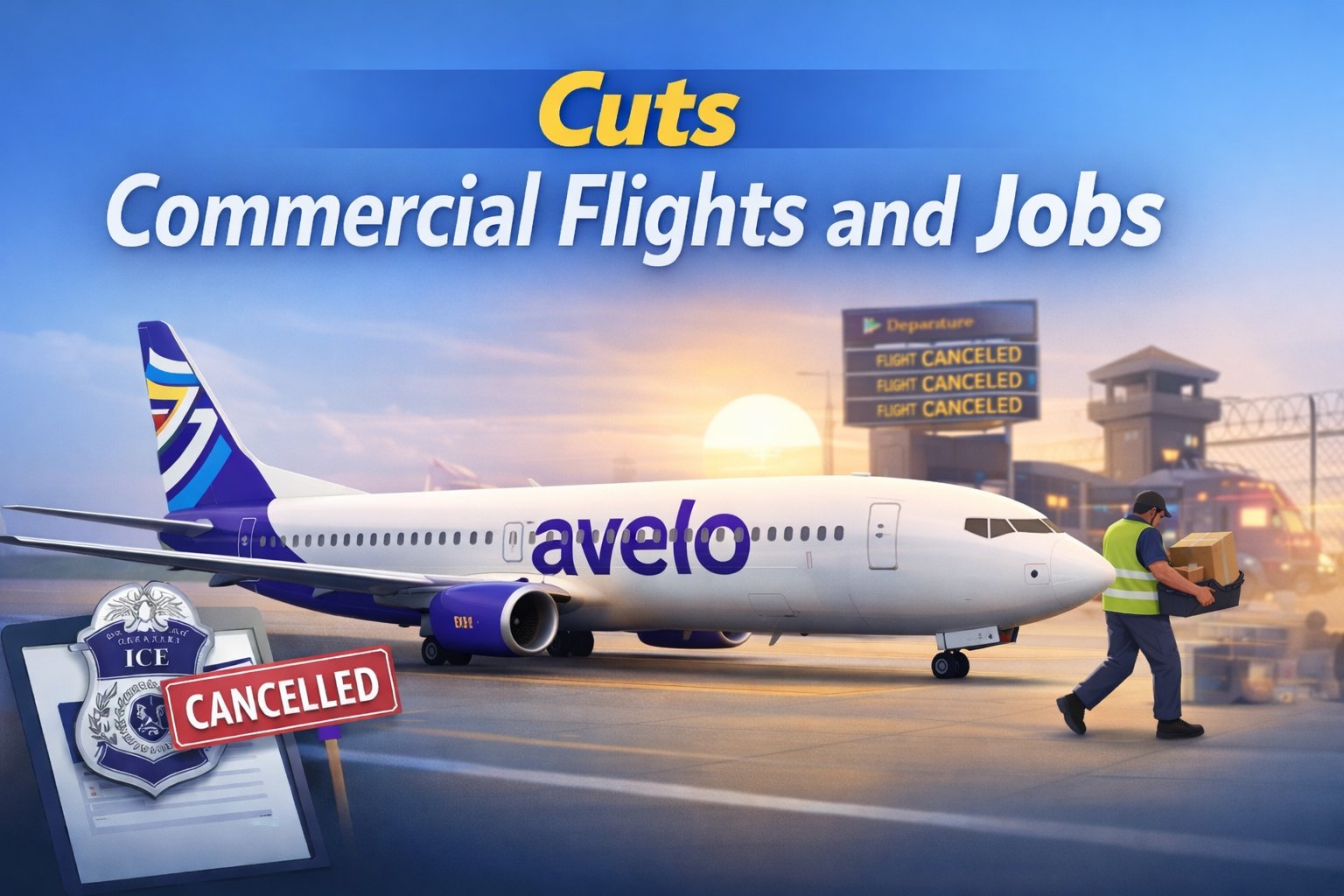
Avelo Airlines has announced significant operational changes, including the termination of ICE deportation charters as it cuts commercial flights and reduces its workforce. The budget carrier’s CEO revealed these strategic decisions in a company-wide communication, marking a pivotal moment for the airline that launched just three years ago.
Key Developments in Avelo’s Strategic Restructuring
The upstart airline has decided to exit the controversial government deportation program while simultaneously scaling back its commercial operations. These changes will directly impact jobs across multiple locations as the carrier repositions itself for long-term sustainability.
End of ICE Partnership Creates Operational Shifts
Avelo Airlines entered into deportation charter services with U.S. Immigration and Customs Enforcement, seeking financial stability through government contracts. However, CEO Andrew Levy explained to employees that this partnership failed to deliver the expected benefits.
“We moved a portion of our fleet into a government program which promised more financial stability but placed us in the center of a political controversy,” Levy stated in his employee communication. The program created operational complexities and costs that ultimately outweighed the financial benefits.
Major Base Closures and Fleet Reductions
Mesa, Arizona Base Elimination
The airline will shut down its Mesa, Arizona base as it discontinues ICE deportation charters. This closure represents a significant operational downsizing as the carrier realigns its resources away from government contracts.
East Coast Operations Affected
Avelo Airlines plans to close bases at two key North Carolina airports:
- Raleigh-Durham International Airport
- Wilmington International Airport
Despite these closures, the airline commits to maintaining service to both cities through alternative operational arrangements.
Fleet Downsizing
The carrier will return six Boeing 737-700 aircraft as part of its restructuring efforts. This fleet reduction directly correlates with the operational downsizing and contributes to the need for workforce adjustments.
Employment Impact and Workforce Changes
The operational restructuring will result in significant jobs reductions across the airline’s network. CEO Levy acknowledged that while some transfer opportunities exist, the smaller fleet and reduced network necessitate workforce cuts.
“Some transfer opportunities will be available, but we will need to reduce the number of positions due to our smaller fleet and network,” Levy informed employees.
Union Response to Changes
The Association of Flight Attendants-CWA, representing Avelo Airlines cabin crew, expressed support for ending ICE flights. The union stated that crew members “didn’t originally sign up for” deportation flights and hopes the changes bring greater stability to flight attendant positions.
Strategic Focus on Core Markets
Remaining Operational Bases
Avelo Airlines will concentrate operations on five key locations:
- Tweed New Haven Airport, Connecticut
- Lakeland Linder International Airport, Florida
- Wilmington Airport, Delaware
- Concord-Padgett Regional Airport, North Carolina
- McKinney National Airport, Texas (new base)
Market Positioning Strategy
The carrier originally launched with a mission to connect smaller cities with affordable air service. This refocusing allows Avelo Airlines to return to its core business model while eliminating the controversial government charter operations.
Financial Position and Future Outlook
New Capital Injection
Despite the operational challenges, CEO Levy assured employees that the airline secured substantial new financing at the end of 2024. He emphasized that the carrier’s “financial position has never been stronger” following this capital infusion.
Customer Impact and Communications
The schedule changes will affect numerous passenger itineraries. Avelo Airlines has committed to proactive customer communication through text messages and email notifications to minimize travel disruptions.
Industry Context and Market Challenges
Budget Airline Pressures
The changes at Avelo Airlines reflect broader challenges facing budget carriers in the post-pandemic aviation market. Rising operational costs, competitive pressures, and the need for sustainable revenue streams have forced many airlines to reassess their business models.
Political Controversy Considerations
The decision to end ICE deportation charters removes Avelo Airlines from politically sensitive operations that generated protests and criticism from various stakeholders. This strategic withdrawal allows the carrier to focus on commercial aviation without political complications.
Looking Forward: Avelo’s Path to Stability
The comprehensive restructuring positions Avelo Airlines for a more focused future in commercial aviation. By eliminating ICE deportation charters, reducing its fleet, and concentrating on core markets, the airline aims to achieve the operational efficiency and financial stability that eluded it during its experimental phase with government contracts.
The workforce adjustments, while challenging for affected employees, reflect the airline’s commitment to rightsizing operations for long-term viability. With new capital backing and a clearer strategic focus, Avelo Airlines appears positioned to navigate the competitive budget airline landscape more effectively.
This restructuring represents a critical juncture for the young carrier as it transitions from rapid expansion and diversification back to its original mission of providing affordable air service to underserved markets across the United States.